Beginner Guide
Ledgerbound Choices and Consequences: A Spoiler-Free Guide to Permanent Decisions
How to approach Ledgerbound's official promise that choices matter—without relying on unverified route charts, hidden-score claims, or spoilers.
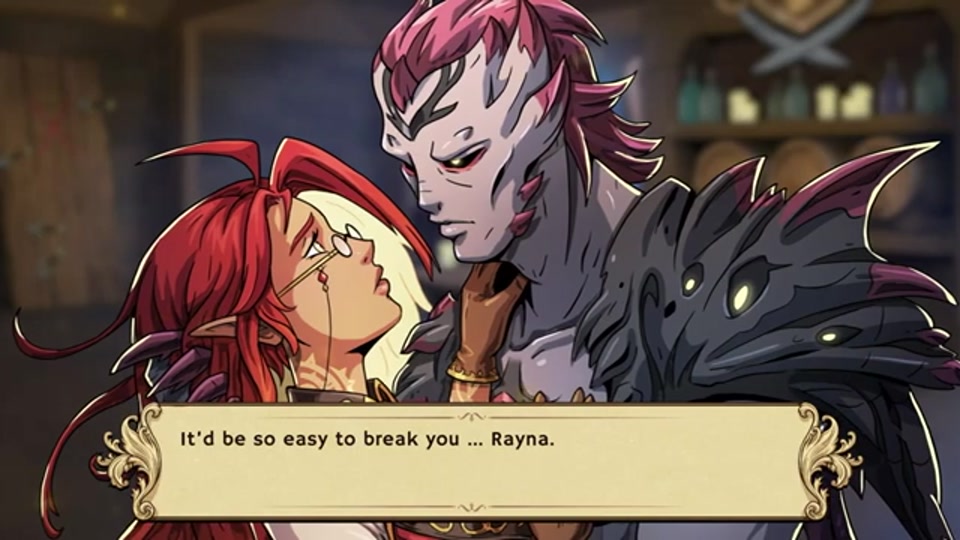
The official Ledgerbound store description says choices matter and that each decision leaves the player stuck with it forever. That is a meaningful promise about tone and stakes. It is not a published master key to every dialogue result, romance condition, or ending. This guide helps you play thoughtfully without turning the first run into a search-engine exercise or trusting route charts that do not identify their version and evidence.
Start with what the official statement means
The store wording establishes that decisions have weight in the game’s public design identity. It does not specify whether every choice changes a relationship value, whether every outcome is irreversible in the same way, or whether an individual scene has a hidden branch. A strong guide must preserve that scope. “Choices matter” is a reason to read; it is not proof that a particular reply is a trap.
The game also presents relationships as part of its premise. The official romance announcement introduces eligible characters, but it does not publish a complete flowchart. The safest first-play assumption is that you should take dialogue seriously, not that you must research every sentence before selecting it. The story is built for players to make decisions, not only for players who have already read a database.
Define what you mean by a good first run
“Best” can mean several things. You might want the most emotionally honest response, the greatest tactical challenge, a particular relationship, an efficient completion, or simply a story you can call your own. Those goals can point in different directions. An online route may be optimal for one objective and completely wrong for another.
Before a significant choice, ask which value you care about. Are you responding to a character as you understand them? Are you avoiding a visible risk? Are you pursuing curiosity? Are you role-playing Rayna in a particular way? There is no universal answer in the sources cited here. A defined personal goal makes a decision easier to live with, even if the result surprises you later.
Read the option, the context, and the warning
Do not skip the surrounding dialogue in search of an answer key. Note who is asking, what the immediate problem is, and whether the interface gives a clear warning. Explicit in-game text is the best source for the choice you are currently making. If the game says a decision is final or identifies a consequence, take that information seriously. If it gives no such indication, do not treat an external rumor as more authoritative than the game itself.
Sometimes a choice is written to express character rather than to distribute rewards. Sometimes it is designed to create uncertainty. The fact that outcomes matter does not mean every option has an invisible numerical test behind it. Allowing ambiguity to exist can make a narrative game more satisfying than converting every conversation into a score calculation.
Save habits and player preference
Use the game’s normal save and replay tools if they exist and if that suits how you want to play. Some players enjoy living with a first decision; others enjoy exploring alternatives after a scene. Both approaches are legitimate. What this guide discourages is a habit of using unstable workarounds, force quits, or file changes to reverse a choice based on a claim you cannot verify.
Technical context matters. The first launch hotfix documents a battle-save issue and directs affected players to a title-screen Reset Battle option. That is a specific, official recovery step for a named issue—not a general solution for dialogue regret. Keep troubleshooting and narrative choice management separate. Our Patch #1 guide explains the difference.
How to ask for help without receiving spoilers
A good help request names a boundary. Say where you are, what choice is on screen, and what you want to know. “Does the game clearly warn me before an irreversible romance lock?” is a limited question. “Which ending should I pick?” asks for a much larger spoiler. Be explicit about whether you want only a yes/no answer, a hint, or a full explanation.
When reading a response, look for evidence. Does it identify the platform and game version? Does it describe a visible condition? Does it distinguish an observed result from an interpretation? A reply that says “always choose X” without context may be a personal preference, an obsolete demo experience, or an untested assumption. It should not become a rule simply because it is confidently written.
Romance choices deserve extra care
The public material makes relationships a genuine part of Ledgerbound, and named characters such as Cazian appear in official romance promotion. That tells you the theme exists; it does not require you to decide a route before you meet the cast. A basic profile can confirm a performer or promotional role without revealing a later scene. Our Cazian profile and voice-cast guide follow that spoiler-light approach.
Avoid assuming that affection means agreement, that disagreement means failure, or that every workplace joke has an HR-style hidden penalty. Read the specific scene. The game’s corporate satire can make procedural language funny without turning every line into a literal system notification.
Tactical choices are also choices
The store describes tactical battles and says every battle needs clever strategic thinking. A combat decision can feel permanent in a moment, but that does not make it the same thing as a story flag. Use the encounter’s visible objective, current tooltips, and normal retry options to learn. If you lose, change one variable and observe the result rather than declaring a party choice irreparably wrong.
Balance and technical conditions can change after launch. If an old guide claims that one approach is mandatory, check whether it names the version. The final demo and launch hotfix both show why version context matters. A useful strategy is one that identifies its setting, conditions, and intended outcome.
A small decision journal helps
If you worry about forgetting why you chose something, keep a lightweight note with the chapter, the visible choice, and your reason. Do not write a prediction as though it is fact. A note such as “I chose this because Rayna seemed concerned about X” preserves your own story logic. Later, if you replay, you can compare experiences without consulting a spoiler list.
This is especially helpful in a long narrative game because your first instinct can be more meaningful than an alleged optimal answer. It also makes it easier to report a genuine issue: you will know what the game showed and what you selected, rather than trying to reconstruct a sequence from memory.
Bottom line
Ledgerbound publicly promises that choices matter; use that as a reason to pay attention, not as a reason to fear every dialogue line. Define your own goal, read the current in-game context, use normal save tools if you want to explore, and seek bounded, version-aware help when necessary. You will get a more honest—and usually more memorable—first playthrough than by chasing an unverified “perfect” route.
Frequently Asked Questions
Do choices matter in Ledgerbound?
The official Steam description says choices matter and that players are stuck with decisions forever. Exact effects should be verified from current game text or clearly versioned evidence.
Can I get a perfect first playthrough?
This guide does not assume a universal perfect route. Define what you want to experience and avoid spoiling yourself with unverified completion charts.
Should I reload after every dialogue choice?
Only if you personally want that style of play and the game supports it normally. For a first run, reading the choice and accepting its visible context is often more rewarding than chasing an alleged optimal answer.