Overview
How Long Is Ledgerbound? Length & Replayability
How long does Ledgerbound take to beat, and is it worth replaying? What its stage-based structure, permanent choices, romance paths, and optional objectives mean for playtime.
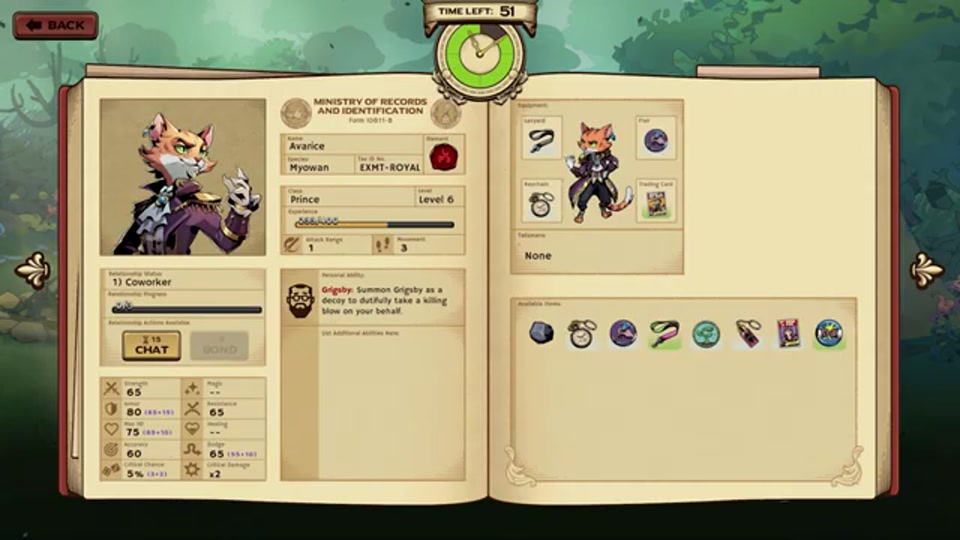
There is no verified official “how long to beat” figure in the store and launch materials cited on this page. That means the most accurate answer is not a number. Ledgerbound is publicly described as a narrative-driven tactical RPG and dating sim, and the final demo covered its first chapters, but neither statement converts cleanly into a promised playtime. Exact hours depend on the version played, how a player approaches tactical encounters, how much dialogue they read, and what they mean by “finished.”
Why an exact hour count needs evidence
Playtime is one of the easiest facts to make look authoritative and one of the hardest to state responsibly. A reviewer may time a focused route with no failures. A player may leave the game paused, reread scenes, experiment with settings, or repeat a battle. Another player may include every optional activity they personally find. All three can report a true experience while producing dramatically different numbers.
An official completion estimate would be a useful baseline, but the cited sources do not publish one. This guide therefore does not borrow a broad genre average and put it beside the game’s name. That practice makes a guess look like product documentation. Instead, use the available information to plan your time in a way that remains valid even as more players finish the released game.
Start by defining “beat”
Before comparing a reported number, ask what it includes. A main-story finish usually means reaching the credits or the primary conclusion without deliberately collecting every optional scene. A first-playthrough finish may include failures, reading, exploration, and personal experimentation. A completionist figure may mean every collectible, achievement, relationship scene, challenge, or variant—but different reporters use that word differently.
For a narrative tactics game, the difference matters. Combat may take longer when you learn a new system or pursue a difficult optional goal. Dialogue may take longer if you read closely or choose to listen to voiced scenes at your natural pace. A relationship-focused player may spend more time in social material than someone who is mainly interested in encounters. None of those approaches is incorrect, so none should be treated as an error against a single public number.
What the official material does tell us
The launch announcement calls Ledgerbound a narrative-driven tactical RPG and dating sim. The final-demo announcement says the demo includes the first chapters, and highlights camp conversations, newsletters, Burn Out, a UI overhaul, and difficulty settings. Taken together, those facts establish a mixed experience rather than a simple sequence of identical battles. They do not establish the total chapter count, a fixed map count, a universal route length, or the amount of text an individual player will see.
The developer’s temporary Steam-review announcement also referred to approximately 350,000 words of game text in the context of platform review. That number should not be used as a completion-time calculator. Text quantity is not spoken duration, unique-path duration, or a promise that one person encounters every line. It is helpful context for why the game may have substantial writing; it is not a stopwatch.
A better way to plan your first session
If you are deciding whether to start tonight, plan for a contained session instead of trying to solve the entire game length in advance. Give yourself time to read the opening tutorial, adjust settings, and finish a natural stopping point. The final demo’s focus on early chapters suggests that the beginning is a meaningful entry slice, but the released game itself is the source for its actual pacing.
If you are deciding whether to buy before a busy week, use the genre description as a reason to expect both tactical and narrative time—not as a commitment to a number. You can always begin with a few sessions, then decide whether you want to pursue the story more intensively. This is more practical than cancelling plans around a number that came from an unverified aggregator or a reviewer playing a different version.
How difficulty affects elapsed time
Difficulty can change duration without changing the amount of authored content. A challenging encounter may require retries or different tactics; an easier setting may let a player move through the same material with less friction. The final-demo announcement mentions difficulty settings, and the first launch hotfix lists the balance of Uninsured Difficulty as a known issue. That is exactly why a single completion time should be treated with caution.
Choose the setting that makes the game enjoyable for your purpose. If your priority is story and characters, it is reasonable to reduce time spent on a battle that has stopped being interesting. If your priority is tactical mastery, expect the same content to occupy more of your own time. Neither preference invalidates someone else’s report. See our Burn Out guide for the version-aware demo and difficulty context.
Replayability: what can be said without inventing routes
The launch framing confirms tactical gameplay and relationship elements. Those are features that can make players want another run, but this page does not claim a specific number of romance paths, permanent branches, endings, or required replays. Such claims need direct current-game evidence and careful spoiler labels. A recognized voice actor or a character appearing in a trailer also does not prove a route condition. Our confirmed voice-cast guide explains that source boundary.
There are still honest reasons to replay a game like this: trying a different approach to tactics, taking more time with dialogue you skipped, playing at a changed difficulty, or simply revisiting a setting you enjoyed. These are player choices, not a promise that the game contains a particular hidden branch. A durable guide should let readers make that distinction.
Evaluating player-reported times
When reliable community completion reports become available, compare several rather than selecting the shortest or longest. Prefer posts that name the platform, version, difficulty, and definition of completion. Be wary of a number copied across dozens of sites with no first-hand source. Note whether the reporter played before or after a balance patch and whether they count idle time.
If you publish your own time, make it useful: say whether it was your first run, what you included, and whether any technical issue affected it. This kind of context is more valuable than a bare total and helps other players set realistic plans.
Bottom line
No official completion time is currently cited for Ledgerbound. Expect a blend of tactical play and narrative/relationship material, but do not mistake a genre comparison or word-count headline for a promise of hours. Define the kind of finish you care about, use current patch information for difficulty context, and treat version-labelled player reports as experiences rather than universal facts. For the current launch status, consult the release and platform guide.
Frequently Asked Questions
How long does it take to beat Ledgerbound?
Official store materials and the cited launch announcements do not provide a verified completion time. Treat any exact hour estimate as a dated player report, not an official promise.
Is Ledgerbound replayable?
The public premise includes tactical play and relationships, which can support different player priorities. Specific replay branches, route requirements, and completion counts need current, verifiable evidence before being presented as fact.