Systems Guide
Ledgerbound Burn Out and Time Management: What the Official Demo Revealed
A careful guide to Ledgerbound's Burn Out concept, camp conversations, difficulty context, and how to avoid mistaking demo-era information for a final-system walkthrough.
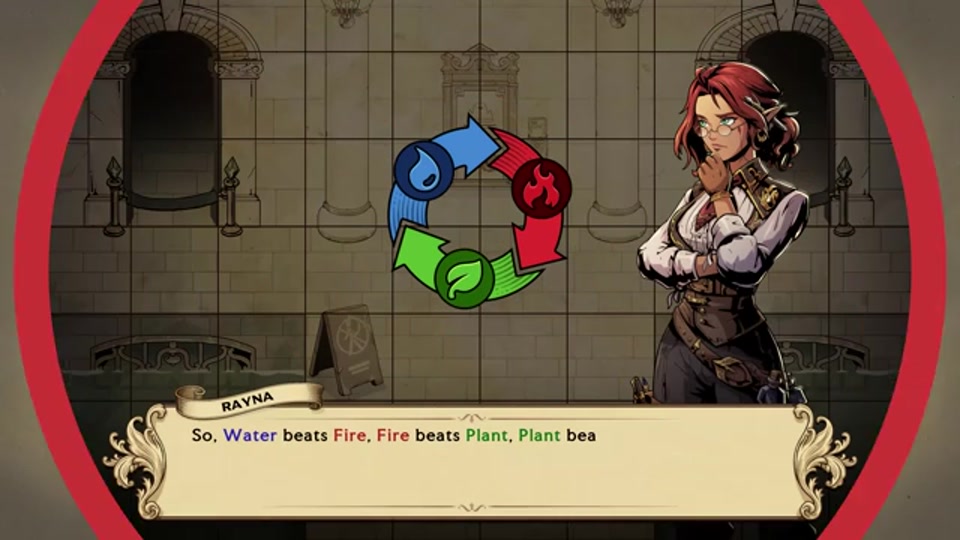
The phrase Burn Out appears in OmniMegaSuperCorp’s official final-demo announcement for Ledgerbound. It is an appealing search term because it suggests pressure, pacing, and the game’s workplace satire all at once. It is also a place where a guide can easily go wrong. A developer saying that a mechanic exists does not automatically publish its formula, thresholds, optimal sequence, or final balance. This page explains what the announcement establishes, how to approach a time-management-style system responsibly, and where to look when the live version overrules a demo-era impression.
What the official demo announcement confirms
The final-demo post says the demo included the first chapters and identifies Burn Out as a mechanic. It also mentions new portrait animations, conversations with the BFF Hat Rack, camp newsletters, a user-interface overhaul, and difficulty settings. The studio asked players to share feedback about difficulty, time, burnout, and performance. Those details are valuable because they show the areas the team was actively presenting for player feedback before release.
They are not a complete rulebook. The announcement does not give us a safe basis to claim a precise number of turns, days, points, actions, or penalties. It does not say that every activity has one fixed cost, that a particular route eliminates the system, or that a single “best” schedule applies to every player. If a video, preview, or forum post supplies such a formula, check whether it identifies a game version and whether the claim can be reproduced in the current release.
The cleanest definition, then, is limited: Burn Out is a named mechanic connected to the demo’s treatment of time or pressure, and the developer specifically invited feedback on it. The live game’s tutorials and newest official patch information are the appropriate sources for detailed play advice.
Why players should care about version context
Demos are both useful and temporary. They introduce a game to new players, collect feedback for the developer, and give critics something concrete to discuss. They are not automatically a promise that every interface element, difficulty curve, or mechanic will work in exactly the same way at launch. The final-demo announcement itself signals iteration: it highlights a UI overhaul, new portrait animations, and adjustable difficulty, all of which are the kinds of features that can change how a system feels in practice.
That does not make demo impressions worthless. It means they should be dated. A helpful sentence looks like this: “The final demo introduced Burn Out and asked for feedback about time and burnout.” An unhelpful sentence would claim that a demo strategy is a permanent solution without naming the build. The difference protects both newcomers and returning demo players who may encounter a changed tooltip, adjusted encounter, or revised difficulty option.
The first launch hotfix reinforces this lesson. Its known-issues list includes the balance of Uninsured Difficulty. That is evidence that difficulty is live, versioned information rather than an immutable property from an early build. See our Patch #1 known-issues guide for the exact scope of that announcement.
A practical mindset for Burn Out-style systems
Even before relying on a detailed walkthrough, you can make sensible, low-risk decisions around a system that appears to measure pressure or time. Read the in-game explanation at the moment it appears. Notice what action seems to advance it, what the game says about consequences, and whether the game presents a clear way to recover, rest, prepare, or accept a trade-off. Keep those observations separate from assumptions imported from other RPGs.
Then make one small experiment at a time. If you are unsure whether an activity is optional, do not spend an entire session trying to reverse-engineer the game from memory. Take note of the state before and after a single decision, use a normal save point if the game provides one, and compare the text the game actually displays. A small test gives you better information than a vague belief that “everything is on a timer.”
Finally, do not mistake pressure for failure. A system called Burn Out may be meant to make priorities meaningful, to invite adaptation, or simply to support the story’s workplace satire. Only the current game text can tell you what its actual failure conditions are. If the game gives you choices, consider what you are trying to optimize: a first clear, a particular relationship, exploration, or a challenge run. Those goals can lead to different sensible decisions.
Camp conversations and the BFF Hat Rack
The final-demo announcement also names conversations with the BFF Hat Rack and camp newsletters. These details indicate that the game has social or reflective space around its main action. They should not be oversold. The announcement confirms their presence in that demo context; it does not confirm exact dialogue triggers, relationship values, secret outcomes, or a finite checklist of every conversation.
For a player, camp scenes are usually worth treating as information-rich moments. Read the text rather than clicking through it as if it were a menu. It may establish tone, update your sense of a coworker, or make the setting feel inhabited. If you are attempting a spoiler-light first run, that is enough reason to engage with them without consulting an exhaustive route chart.
For a guide writer, the same restraint applies. It is safe to say that the developer highlighted camp newsletters and BFF Hat Rack conversations in the final-demo post. It is not safe to declare a “correct” dialogue answer unless a current, reproducible source documents the actual effect. The distinction lets a site be useful without turning every quiet scene into an invented optimization puzzle.
Difficulty is feedback, not a badge of worth
The official demo material mentions difficulty settings, and the first hotfix lists Uninsured Difficulty balance among its known issues. Together, those statements support a player-centered approach: choose a setting that lets you learn the game and enjoy its writing. A lower setting is not a failure to understand a tactical RPG. A higher setting is not automatically a better first experience if it makes you repeat a tutorial encounter until the story’s momentum disappears.
If you want to raise the challenge, do it with a clear intention. You might enjoy testing tactics, revisiting a favorite encounter, or seeing whether your own decision-making improves. If you want to lower the pressure, do that with equal intention. The important thing is to recognize balance as a moving target after launch. When official notes say a difficulty mode is under review, an old guide’s recommendation deserves a date stamp, not blind trust.
Turning uncertainty into a useful bug or feedback report
The demo announcement explicitly invited feedback on time, burnout, difficulty, and performance. Good feedback gives a team something it can investigate. Describe the version, the setting selected, what you were doing immediately before the issue, what you expected from the visible rule, and what happened instead. If your concern is balance rather than a crash, say which decision felt forced and why; do not claim the underlying equation unless the game exposes it.
For example, “I did not understand why this state changed after this activity” is a starting observation. “Burn Out is mathematically impossible to manage” is a much larger claim that needs evidence. A short clip or screenshot can help if it does not expose personal data or spoil a major story moment. Keep the report respectful and specific; a developer can work with a reproducible sequence far more easily than a general frustration.
A sensible reading order
Start the released game with its own tutorial and tooltips. Next, check the newest official notes for system or difficulty changes. Then read a version-dated guide when it identifies the build it tested. Use demo posts to understand the game’s development history and to see why players were talking about Burn Out, but do not let them replace current documentation.
For the surrounding premise, see our Eldarra and Bureaucratic Society guide. For launch status and other post-release context, see the August 13 launch timeline. That combination gives you an accurate foundation: the mechanic was publicly introduced in the demo, the game launched afterward, and live balance or technical details should always be checked against the newest official information.
Frequently Asked Questions
What is Burn Out in Ledgerbound?
The developer's final-demo announcement identifies Burn Out as a mechanic. Public announcement material does not provide enough detail here to publish exact values or a universal optimization formula.
Did the demo include camp conversations?
Yes. The official final-demo post mentions conversations with the BFF Hat Rack and camp newsletters among its additions.
Are demo mechanics guaranteed to match the released game?
No. A demo is a versioned build. Use the newest official patch notes and in-game explanations for current rules and balance.