Overview
Hy’oth and the Weft: Ledgerbound Lore Explained Without Story Spoilers
A source-led introduction to Hy’oth, the Weft, and the Vacari's place in Ledgerbound's published history, based on OmniMegaSuperCorp's official lore announcement.
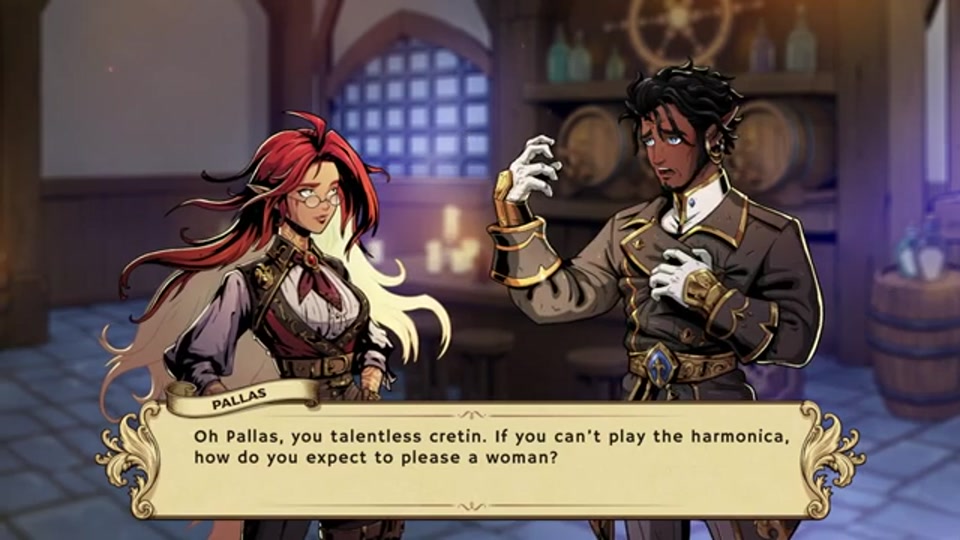
The Weft and Hy’oth are part of Ledgerbound’s published lore vocabulary. They can sound like the kind of names that invite an immediate fan theory, but the developer’s official history post already gives a useful, spoiler-conscious starting point. It describes the Weft as a magical plane of unfettered power and identifies Hy’oth as a sinister force found there. It also links Hy’oth to the Vacari in the historical account. This page explains those confirmed basics, clarifies what the source does not establish, and helps a first-time player approach the setting without accidentally replacing story discovery with speculation.
The Weft in the official historical account
OmniMegaSuperCorp’s Bureaucratic Society history post introduces the Weft as a magical plane of unfettered power. That phrase tells us two important things. First, the setting’s magical world is not limited to the everyday institutions of Eldarra; there is a larger metaphysical context in the published lore. Second, the source is careful enough to name the place before explaining every possible rule that governs it. A reader should preserve that distinction.
The post does not provide a complete gameplay manual for the Weft. It does not say that every character can enter it, that it is a map type, that it has a particular elemental relationship, or that a specific scene occurs there. Those would be new claims requiring their own current evidence. A setting term can be important without being a player-accessible system, and a lore page should not turn a sentence of history into a made-up feature list.
Hy’oth: what the source actually says
The official post identifies Hy’oth as at least one sinister force living in the Weft. It says that Hy’oth corrupts the good nature of people who encounter it by promising eternal power, and that it can manipulate whole species to carry out its aims. This establishes a thematic connection between power, corruption, and control. It does not establish every motive, visual form, weakness, or ending associated with Hy’oth. Those gaps are not defects in a guide; they are parts of the story that deserve either an official source or a spoiler warning.
The word “corrupt” is especially worth reading carefully. In an official lore post, it describes the writer’s stated view of Hy’oth’s influence. It should not be used to declare that every character connected to the Weft is irredeemable, that a player choice has one moral outcome, or that a later narrative reveal has already been settled. Let specific scenes establish their own stakes and nuance.
The Vacari connection
The same historical account says that the Myowan species fled Hy’oth’s minions, the Vacari, and later arrived on Eldarra. This is the strongest public link between the Weft, Hy’oth, the Vacari, and the setting’s early history. It helps explain why a present-day threat can also be a subject of historical memory. It does not justify an exhaustive monster catalogue, a universal combat counter, or a claim that every Vacari encounter will reveal identical lore.
For the combat-facing public premise, see our Vacari guide. It keeps the same boundary: the enemy’s central importance is confirmed, while precise encounter tactics need the current in-game conditions. A lore name and a battle mechanic may overlap, but they are not automatically the same kind of evidence.
Why this lore fits Ledgerbound’s tone
Ledgerbound pairs a cosmic threat with office and insurance satire. The Weft and Hy’oth give that satire real scale: procedures and workplace pressures exist in a world that also has magical power, historical displacement, and an immortal enemy. The result is not simply “fantasy with paperwork.” The public material suggests a world where institutional language becomes one way people try to manage risks that are larger than any policy.
That is an interpretation of the published setup rather than a plot summary. It helps a new player understand why a game can make room for both tactical battles and bureaucratic comedy. It should not be stretched into a claim that a named institution secretly controls Hy’oth or that every form has a hidden magical effect. Satire works because the mundane and extraordinary are deliberately placed together; it does not require a guide to manufacture a conspiracy out of every joke.
The Myowan arrival and the history of Eldarra
The official lore post says that no one currently living on Eldarra originated from the planet and identifies the Myowans as the first arrivals after escaping the Vacari. It then describes later refugees, the formation of civilization, and the Myowans’ unification of society under a Queendom. This history gives context to the term “bureaucratic kingdom” used in the store description. It is a published starting point, not a full timeline of every people, war, office, or character.
The important practical lesson is that setting history can clarify current language without spoiling current events. A player can recognize that Eldarra’s bureaucracy has roots in its published past while still letting the game reveal how individuals understand that past. Our Eldarra and Bureaucratic Society guide offers the broader, non-spoiler orientation.
How to read lore posts responsibly
Treat an official lore post as authored context. It is a primary source for the statements it makes: names, broad history, and the developer’s intended framing. It is not proof of every conclusion a reader might draw from those statements. Keep direct claims, reasonable interpretations, and theories in separate mental boxes.
For example, “Hy’oth is associated with the Weft” is directly supported. “A given character is definitely controlled by Hy’oth” needs scene-specific proof. “The Weft will be the final dungeon” is a prediction unless the developer says so. This simple method helps prevent a story site from becoming an echo chamber where one exciting idea is repeated until it looks official.
Dates matter as well. The history post is a pre-launch source. A later released-game scene or official patch note may add nuance or correct a practical detail. When that happens, link both sources and describe the difference rather than silently blending them into a false timeless fact.
A spoiler-safe first-play approach
If you encounter the Weft or Hy’oth in a scene, pause long enough to read the exact wording before searching for answers. Notice whether the information comes from a historical record, a character’s opinion, a company document, or a direct event. Those sources can have different reliability within the fiction, and the game may be inviting you to notice the difference.
If you ask for help, say where you are and what you want to avoid. “Can you explain this name using only the published lore?” is a useful request. “Tell me what Hy’oth really is” may invite a major spoiler. Giving a helper a boundary lets them answer the question you actually have rather than flattening the mystery.
What this guide will not do
We will not turn a public history paragraph into an element chart, a boss guide, or a list of hidden endings. We will not use leaked material, alleged datamines, or unattributed screenshots to fill missing details. When we add story-heavy coverage, we will mark the spoiler level, name the release version if relevant, and link direct evidence. That is the only reliable way to expand lore coverage without spoiling or misstating the game.
The confirmed foundation is already compelling: the Weft is a magical plane of unfettered power; Hy’oth is a corrupting force associated with it; and the Vacari are identified in the developer’s historical account as its minions. Start there, let the game build on it, and use source-labelled guides when you want more context.
Frequently Asked Questions
What is the Weft in Ledgerbound?
The developer's official lore post describes the Weft as a magical plane of unfettered power. This page does not assume its full in-game rules or late-story significance.
Who is Hy’oth?
The official lore post identifies Hy’oth as a sinister force associated with the Weft that can corrupt others by promising eternal power.
Are the Vacari connected to Hy’oth?
The published lore says Hy’oth can manipulate species to do its bidding and identifies the Vacari as its minions in the historical account.