Overview
Casters, Three Moons, and Eclipses: Ledgerbound's Published Magic History
A non-spoiler explanation of Casters, Eldarra's three moons, eclipses, and the era of prosperity described in Ledgerbound's official history.
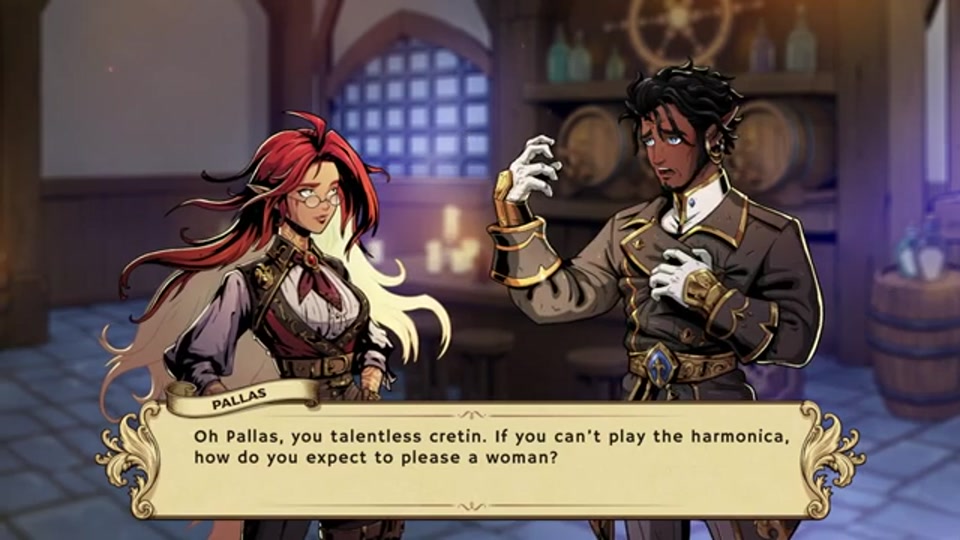
Casters, Eldarra’s three moons, and the idea of an eclipse appear in OmniMegaSuperCorp’s official history as connected pieces of the setting’s past. The post says Casters eventually supplied basic needs such as food and shelter, helping Society enter an era of prosperity. It also says that scientists decoded astrological phenomena and learned that an eclipse of the three moons guarantees the birth of a powerful Caster. These are rich worldbuilding facts; they are not a license to invent an exact spell list, an inheritance system, or a build guide the game has not documented.
Casters in the official history
The developer’s historical account places Casters within a period after the setting’s earlier political and bureaucratic formation. It says they provided everyone with basic needs, including food and shelter, and that society entered an era of prosperity. This establishes that magic has social and economic consequences in Eldarra. It is not merely a decorative visual effect or a private talent that leaves the rest of the world unchanged.
That framing makes the setting more interesting. When magic can affect necessities, it can alter work, institutions, inequality, invention, and daily expectation. The official post goes on to associate this prosperous period with invention, exploration, and artistic activity. A player can therefore understand Casters as part of the background that makes Eldarra’s elaborate civilization possible, rather than assuming that every important figure must be a sword-wielding hero.
The source does not establish that all Casters have identical abilities, that every resident is one, or that a particular named character’s magic has a declared origin. It also does not provide an in-game combat formula. Keep lore, character biography, and mechanics in separate categories unless the game directly links them.
Three moons and the eclipse discovery
The history post says that scientists cracked the code behind astrological phenomena, including solar eclipses that guarantee powerful Casters are born. It also says that understanding the cycles of Eldarra’s three moons meant more Casters were born than ever before, because birth under the eclipses could be accurately timed. This is a specific public claim about how astronomical knowledge shaped the setting.
It is tempting to treat a three-moon eclipse as a universally accessible player event, a calendar system, or a character creation choice. The cited source does not say that. It presents the discovery as historical information. A player should wait for current in-game text before assuming an eclipse appears as a quest, a combat weather effect, or a date-based route trigger. A lore detail can be central to a world without being a menu option.
Science, magic, and bureaucracy
The combination of astrological research and bureaucratic Society is one of the clearest signs of Ledgerbound’s particular fantasy tone. The world does not treat magic and administration as mutually exclusive. Scientific knowledge of moon cycles can change who is born; institutions can standardize information; a public history can explain cosmic phenomena through language that sounds simultaneously grand and official.
This does not prove that the Bureaucracy controls magic or that every scientific institution is benevolent. Those are possible story questions, not conclusions in the source. What it does establish is a setting where knowledge becomes infrastructure. That is useful context for a game whose public premise also puts an insurance adjuster in a world-saving role.
For the institutional side of that history, see the Queendom and Ministry of Paperwork guide. For the wider prehistory of the Vacari and Eldarra’s arrivals, see Myowans and Eldarra’s founding history.
What “powerful” does not tell us
The history says eclipses guarantee the birth of powerful Casters. “Powerful” is deliberately broad in a historical sentence. It does not disclose a ranking table, the maximum value of an ability, a combat tier list, or a guaranteed story outcome. It also does not tell a reader how the world measures power, whether all characters agree on that measurement, or whether power has a moral meaning.
This is a good example of why a source-first site avoids turning one evocative word into a mechanical claim. If the released game gives a specific Caster ability or condition, cite the current text for that situation. If a player reports a strategy, label it as an observation and identify the version. Do not use an in-universe origin story to make up a universal counter or build.
How to read magical history on a first playthrough
When the game refers to an eclipse, a Caster, or the moons, notice the speaker and source. A formal record may provide historical context; a character may offer an opinion; a joke may play with bureaucratic language; a scene may reveal new information. Keeping those distinctions clear lets you enjoy the writing without having a guide hand you a supposed “truth” prematurely.
If you ask for help, specify that you want only public-lore context. That enables a spoiler-conscious answer: explain the official history, then stop. Asking why a specific character was born under an eclipse or what it causes later may expose plot material that a general setting article should not reveal.
Avoiding false astronomy claims
Do not calculate real-world moon schedules and present them as a Ledgerbound guide. Eldarra is fictional, and the official post gives a lore premise rather than a conversion to an Earth calendar. Do not claim a real date will unlock content, nor assume a fan diagram is authoritative. A useful article links the official history and states what it establishes; it does not manufacture an interactive calendar from one paragraph of worldbuilding.
Where this page fits in the lore cluster
This page covers the public magical history. The Hy’oth and Weft guide covers the sinister force and magical plane named in the same official history. The Eldarra setting guide gives a broader introduction to the corporate-fantasy premise. Together they offer context without turning a first playthrough into a wiki summary of future plot points.
Maintenance promise
We will add a Caster or moon-related detail only when it has direct support from an official announcement or a clear, spoiler-labelled current-game source. We will not use leaks, inferred bloodlines, or unsupported ability lists. The confirmed public foundation is already meaningful: Casters helped create prosperity, three-moon eclipses are tied to powerful Caster births, and scientific discovery changed the scale of that phenomenon in Eldarra’s history.
Frequently Asked Questions
What are Casters in Ledgerbound?
The official lore describes Casters as people whose abilities eventually provided basic needs such as food and shelter during a period of prosperity.
Why do Eldarra's three moons matter?
The official history says scientists discovered their cycles and that eclipses guarantee powerful Casters are born.
Does this prove a specific player-character class or build?
No. Lore about Casters does not establish an exact current gameplay class, recruitment rule, or combat formula.