Overview
The Queendom and Ministry of Paperwork: Ledgerbound's Bureaucracy Explained
A non-spoiler guide to the Queendom, Ministry of Paperwork, protocols, and Hero's Insurance in Ledgerbound's official history.
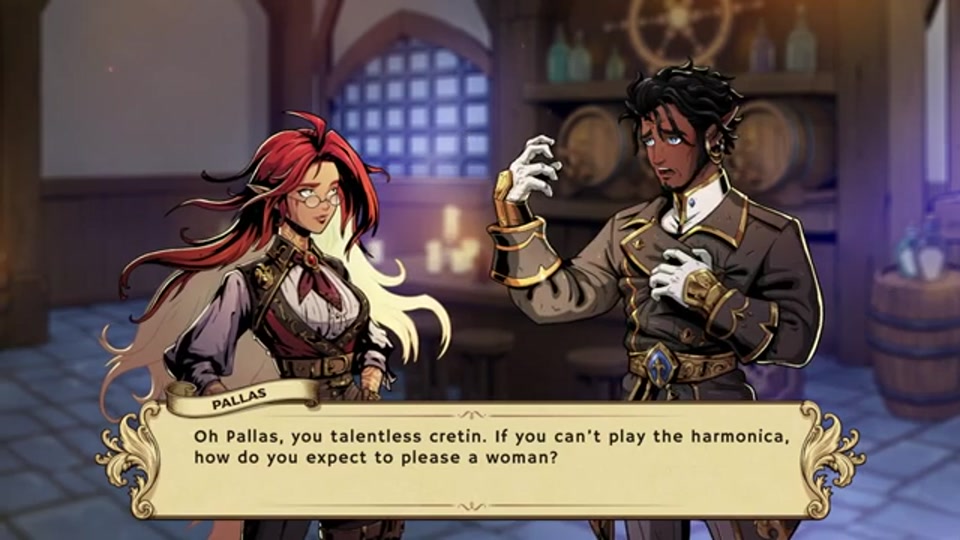
Ledgerbound’s bureaucracy is not just an office-comedy surface. OmniMegaSuperCorp’s official history post gives it a place in Eldarra’s published past: refugees arrive, the Myowans unify society under a Queendom, and institutions emerge to restore order after a Caster Civil War. The post identifies the Ministry of Paperwork as the body that chronicles what matters and treats protocol as a foundation of Society. This page unpacks those public facts without turning them into a spoiler-filled government chart or pretending every bureaucratic joke is a documented game mechanic.
The Queendom in the official history
The developer’s history account says that the Myowans were the first people to arrive on Eldarra after escaping the Vacari, that other refugees followed, and that civilization formed. It then says the Myowans unified Society under the Queendom. That gives the term a historical and institutional meaning in the setting. It is not merely a decorative fantasy title added to a contemporary office.
The same source says the Queen rules over all while many advisors handle much of the day-to-day government operation. This establishes a broad public model: royal authority exists alongside a large administrative structure. It does not tell us the identity, motives, current actions, or full constitutional power of every official. Those details may be story material, and a guide should not infer them from a single historical summary.
For a new player, the useful point is simple. When the game refers to a Queendom, it is pointing to a setting with formal authority and institutional memory. The corporate comedy sits inside that context rather than replacing it. You can enjoy the language of policies and forms while recognizing that it grew from a published history of migration, conflict, and attempts to standardize society.
The Caster Civil War and the Bureaucracy
The official lore says that, after the Caster Civil War, the Queendom established the beloved Bureaucracy to restore order and peace of mind. It says complex procedures were developed to standardize daily life, documentation became central, and the Ministry of Paperwork was established to record matters of importance. Those are direct claims from the developer’s in-universe history.
They should be read as worldbuilding, not as proof of a specific menu system. It would be inaccurate to assert that every document is collectible, that every mission uses a Ministry approval meter, or that an alleged paperwork choice has one fixed ending. The post tells us why documentation matters thematically. The released game and clearly sourced guides must tell us how any particular rule works in play.
This boundary is useful because it preserves the humor. “Paperwork” can be funny without being empty. In the setting, records and procedures respond to a serious historical desire for stability. That tension—between a sensible need for order and the absurdity of formalizing everything—is a more interesting way to read the premise than assuming bureaucracy is only a punchline.
Protocol as a social language
The source says that protocol became the foundation of Society and that Eldarrans understand there is a proper way to do things. It even gives examples of professions whose activities are formalized through institutions. These examples establish a world where rules have cultural as well as administrative force. They do not require you to treat every named organization as a player faction or every mentioned activity as a gameplay feature.
When you meet a protocol, policy, or form in the game, first consider who is speaking and what purpose the language serves. A public record, a manager’s instruction, a character complaint, and a satirical ad may all sound official while carrying different narrative weight. This is a spoiler-free reading habit, not a hidden-choice guide. It helps you notice the setting’s texture without assuming that every line is a coded mechanical instruction.
Hero’s Insurance in the public premise
The official history describes insurance as particularly important for risky professions and calls Hero’s Insurance a lucrative market. The Steam store description also frames the player as an insurance adjuster who leaves a desk job to face an ancient enemy. Together, these sources explain why insurance is central to the game’s fantasy premise. It is an institution built into how people understand risk, work, and heroic activity in Eldarra.
That does not establish a complete insurance simulation. A guide should not claim a specific claim-denial loop, policy price, equipment benefit, or dialogue reward unless a current source documents it. The power of the premise is broader: it lets a game about saving the world ask how ordinary professional incentives and procedures respond to extraordinary danger. The comedy works because the question is treated seriously enough to have consequences in the setting.
Ministry of Paperwork versus a literal player objective
The phrase “Ministry of Paperwork” is a lore term. An optional task, a visible quest, or a current interface objective is a gameplay term. They may share words, but they should not be collapsed. If an encounter shows an objective, read the exact current text and reward. Do not assume that a historical ministry reference tells you how to complete it. Our optional HR objectives guide explains how to approach visible mission conditions without relying on stale preview claims.
Similarly, if a technical issue interrupts a mission, use current patch information rather than lore interpretation. The first launch hotfix records fixes and known issues for a specific version. The fact that Ledgerbound enjoys bureaucratic language does not mean a crash is an in-universe “procedure.” Keep story analysis and troubleshooting separate.
How to explore the bureaucracy without spoiling the story
Start with the official history post if you want a little context before playing. Then let the game’s own early scenes introduce the institutions at their intended pace. If a new term appears, write down the exact spelling and ask a bounded question such as “What does the public lore say about this institution?” rather than searching for a full plot explanation. That lets you understand the joke and the history while leaving character motives and later events intact.
When reading community discussions, separate direct quotes from interpretation. A player may have a compelling theory about why the Bureaucracy operates as it does, but a theory is not official history. Look for a link to the relevant announcement or current game text. If none exists, enjoy the idea as a theory and avoid copying it into a reference page as fact.
Connections to the wider setting
The Queendom and its institutions make more sense beside the other published history. The Hy’oth and Weft guide explains the external threat and the Vacari’s historical connection. The Eldarra and Bureaucratic Society guide offers a broader overview. Together, these pages show why a world can be both a bureaucratic kingdom and the target of an immortal threat without requiring a reader to know later plot revelations.
What this guide will not claim
We will not assign undisclosed political motives to the Queen, list imagined ministerial departments, or promise that every policy is a branching-choice system. We will not call a fan theory canon because it fits the satire. Future additions will need a direct official source or clearly marked current-game evidence, with major story material kept behind a spoiler label.
The official foundation is already enough for a useful explanation: the Myowans unified Society under the Queendom; after the Caster Civil War, the Bureaucracy and Ministry of Paperwork standardized and recorded life; protocol and insurance became central cultural ideas. Read those facts as the context for the game’s corporate fantasy, then let the story reveal how individual people live within those systems.
Frequently Asked Questions
What is the Queendom in Ledgerbound?
The official history post says the Myowans unified Society under the Queendom after refugees established civilization on Eldarra.
What is the Ministry of Paperwork?
The official lore describes it as an institution established to chronicle important matters after the Caster Civil War.
Why is insurance important in Ledgerbound's setting?
The official history presents insurance as significant for risky professions and describes Hero's Insurance as a lucrative market; it does not disclose every game-system rule.