Overview
Ledgerbound Demo History: What the Final Demo Added and How to Use Old Coverage
A version-aware record of Ledgerbound's public demo, its final-demo additions, and a practical method for separating demo observations from the released game.
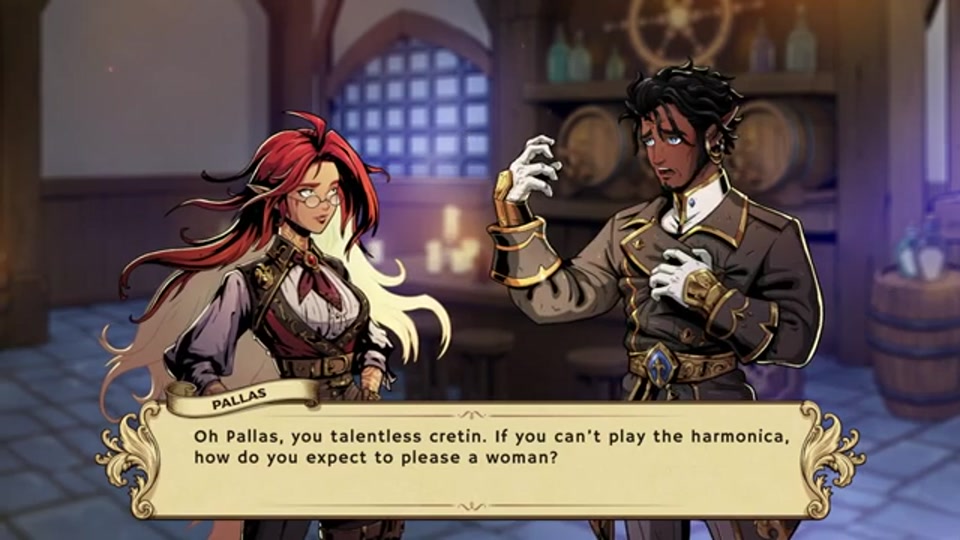
Public demos are unusually valuable records for a narrative game. They show how a studio first introduced its systems, let prospective players test performance, and gave a community a common starting point for discussion. They are also unusually easy to misread after launch. A clip can survive long after its build is outdated; a search result can describe a limited event as though it were a permanent feature; and a popular tip can be correct for a demo while being untested in the current release. This page preserves what OmniMegaSuperCorp publicly said about the final Ledgerbound demo while drawing a hard line between historical information and live-game documentation.
What the final-demo announcement said
The official final-demo post described a build that covered the game’s first chapters. It highlighted new portrait animations, the Burn Out mechanic, conversations with the BFF Hat Rack, camp newsletters, a user-interface overhaul, and difficulty settings. The developer also asked for feedback about difficulty, time, burnout, and performance. These are direct, useful statements about what the team chose to showcase and test during that demo period.
The wording matters. “First chapters” tells a reader that the demo was an opening slice, not an entitlement to the full game. “Final demo” tells a reader that it came late in the pre-release cycle, not that it is automatically identical to the launch build. The list of additions tells us that the studio was still iterating on visuals, interface, and play experience. It does not provide a full changelog for every system, a permanent availability promise, or exact numerical rules for Burn Out and difficulty.
If a page about the demo states more than that, it should identify an additional source. This is the basic standard we use throughout the site: a primary announcement can support claims about the announcement, but not a convenient pile of conclusions that were never published.
Why final-demo coverage stays useful after launch
The final demo is still worth studying for three reasons. First, it explains why some players use particular vocabulary. Burn Out, camp newsletters, and the BFF Hat Rack did not appear from nowhere in community discussion; the studio put them in public-facing material. Second, it gives context for early reviews and videos. A critic or creator may have seen that build rather than the released version. Third, it provides a development snapshot: the UI overhaul and feedback request show where the team expected players to notice change or friction.
None of those reasons make a demo build a better source than a later patch note. Once the game launched, current questions—such as an issue, a supported display mode, or a balance concern—moved into a different evidence category. The first launch hotfix already documents fixes and known issues. See our Patch #1 troubleshooting guide for the distinction. A demonstration of an idea and a post-launch description of its present state are complementary, not interchangeable.
The limited-window rule
A demo announcement often creates the impression that the demo is always available. That is rarely a safe assumption. The developer described public demo windows tied to promotion and pre-release activity. A reader looking for a current download should visit the Steam store page, where availability is presented in the current context. An old article should never tell someone to click “download demo” as though that button is guaranteed to exist.
This rule sounds small, but it improves trust. It prevents frustration for a player who follows an old guide and finds no demo. It also keeps the site from treating historic campaign information as a permanent product feature. If a demo returns, the store page or a new official announcement can establish that fact with a date.
How to read a demo guide without being misled
Start by asking four questions. What build did the author play? When was the guide published? Does it name a patch or release version? Has the author updated it after launch? A clear answer to those questions does not guarantee perfect advice, but it gives you enough context to judge whether a claim is likely to be current.
Next, sort claims into categories. Visual impressions, tone, the opening premise, and the existence of a named system are often durable. Exact ability interactions, encounter balance, menu placement, performance, and difficulty recommendations are more likely to shift. Treat unlabelled exact numbers with special caution. They may come from a build the developers adjusted precisely because the demo feedback was meant to reveal problems.
Finally, compare a demo recommendation with your current in-game text. If a walkthrough says an option exists but your menu does not show it, do not assume you missed a secret. The guide may simply be old. Search for a date-stamped official update before spending time on unsupported fixes or configuration changes.
Interface and performance observations
The official mention of a UI overhaul is a useful reminder that interface criticism needs version labels. A reviewer’s complaint about navigation, readability, or the location of a control can be valid for the demo they played and still be less useful to someone on a later build. Likewise, a strong performance result from a specific machine is an observation, not a guaranteed benchmark for every system.
For your own test, use the current Steam requirements as the baseline, make a note of your operating system and display, and check the latest patch notes if you see a repeatable problem. Avoid presenting “it ran fine for me” as a universal technical answer. A good report states the version, the situation, and the result. That gives other players and the developer something they can compare.
Burn Out, time, and difficulty in a demo context
The final-demo announcement is an appropriate source for saying Burn Out existed in the demo and that the team wanted feedback on it. It is not enough to write a fixed “best schedule” or a universal difficulty ranking. Our dedicated Burn Out and time-management guide explains why: the announcement establishes the public concept, while the released game and newer updates must establish the active rule set.
That is good news for players who found an early demo too easy, too hard, or simply unclear. Their experience can be real without becoming an eternal verdict. In a tactical game with narrative pacing, feedback may lead to revisions that improve clarity, challenge, or accessibility. Use demo commentary to understand the conversation, then use version-aware guidance to make a present-day decision.
A fair archive policy
This site keeps demo information because deleting it would erase useful history. We label it as historical, link its primary source, and avoid silently updating an old statement until it looks like it was written for the launch build. When a newer announcement supersedes a time-sensitive detail, we add a correction or direct readers to the current source.
That policy is especially important for Ledgerbound, whose release moved dates before it ultimately launched on August 13, 2026. See the launch timeline for the documented sequence. A reader should be able to enjoy the history of the demo without being sent toward an obsolete date, unavailable download, or discarded mechanical assumption.
Bottom line
The final demo introduced the opening chapters and highlighted Burn Out, camp material, UI work, and difficulty settings. That makes it an important part of the game’s public history. It does not make every demo-era observation a present-tense fact. Check the Steam page for availability, check new patch notes for technical or balance information, and use old demo coverage as dated context. That simple habit keeps a useful archive from becoming a source of launch-week misinformation.
Frequently Asked Questions
What did the final Ledgerbound demo include?
The official announcement says it covered the first chapters and highlighted Burn Out, new portrait animations, camp conversations, newsletters, a UI overhaul, and difficulty settings.
Can I rely on a demo guide for the released game?
Only if it identifies its version and has been checked against the released game and later patch notes. Demo information is historical context, not automatic live documentation.
Was the demo available forever?
No. The developer described limited demo windows. Check the current Steam store page rather than relying on an old announcement.