News
Love Ledgerbound's Dating Sim Layer? Five Games With Great Romance Systems
Ledgerbound weaves a full dating sim through its tactics combat. If that's the hook for you, here are five other games that put romance and relationships front and centre.
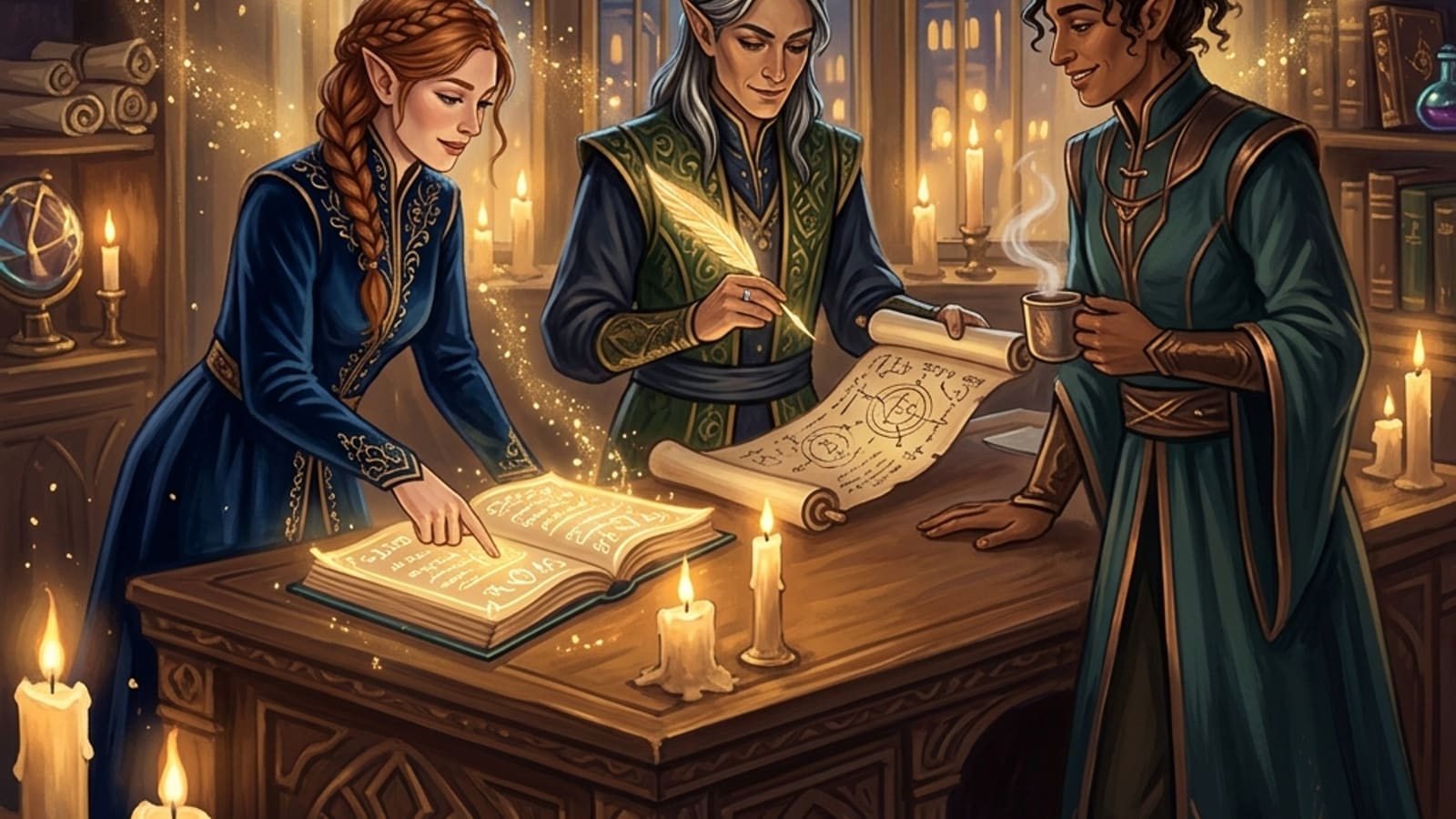
One of the things that sets Ledgerbound apart from other tactics RPGs is that its romance isn’t an afterthought — the dating-sim layer is woven right through the campaign, with companions you court during camp downtime and permanent choices that mean you can’t romance everyone in a single run. If that’s the part you’re most excited about, you’re in good company: relationship systems have quietly become one of the most beloved features in modern games.
Here are five titles, across very different genres, that do romance especially well.
Ledgerbound
The home team. Its comedy-tinged office fantasy lets you date companions — and even your manager — between tactical missions, with a voice cast stacked with talent. Start with our companions & romance guide to plan your run, since those choices stick.
Moonlight Peaks
If you like the idea of building relationships at your own pace, this one swaps battlefields for a moonlit farm. It’s a cosy supernatural life sim where you play a young vampire, and romance is a slow-burn affair tangled up with farming, decorating and small-town friendships. It has been picking up a steady following ahead of its demo — you can keep up with the dateable cast and release news over at moonlightpeaks.wiki (moonlightpeaks.wiki).
Baldur’s Gate 3
The modern benchmark for reactive romance. Companions remember what you do, relationships shift with your choices, and the writing treats each arc with real weight. If Ledgerbound’s “your choices are permanent” pitch appeals, BG3 is the deep end of that pool.
Stardew Valley
The comfort-food classic. Twelve marriage candidates, heart events that flesh out each character, and a gentle courtship loop that runs alongside the farming. Proof that romance doesn’t need high stakes to be memorable — sometimes it just needs patience and a good gift.
Fire Emblem: Three Houses
Tactics fans will feel at home here. Support conversations build bonds between units that pay off both narratively and mechanically, and the social-sim school segments give relationships room to breathe between battles — a structural cousin to Ledgerbound’s camp downtime.
The common thread
What ties these together isn’t genre — it’s the idea that the people around you matter as much as the systems. Ledgerbound bets heavily on that, and it’s in great company. If you want another relationship-driven game after Ledgerbound, any of these can scratch the same itch. For more on how Ledgerbound’s relationships work, see our companions & romance guide.
Editorial verification and current-reading note
This page is part of the site’s dated coverage of games with romance systems like ledgerbound. It remains useful as a record of what was announced, shown, or discussed at the time it was published. It should not be used by itself as proof of present-day availability, balance, platform support, technical status, or a complete gameplay rule. Ledgerbound’s public record includes demo material, release announcements, and post-launch patch notes; each answers a different question and can supersede an earlier time-sensitive claim.
The first step for a reader is to identify the kind of information they need. The Steam store page is the appropriate place to check the live product description, listed requirements, language information, and regional availability. The newest official Steam news post is the appropriate place to check a patch, known issue, release update, or developer statement. A historic article such as this one is the appropriate place to understand the sequence of announcements or the context around a promotion. Mixing those three source types produces the misleading impression that all facts were published at the same time.
When an older sentence conflicts with a newer primary source, the newer source wins for a current decision. This does not mean the old article was worthless or should be silently rewritten as though it had predicted the future. It means the page should preserve its date and give readers a path to the current record. For example, a demo observation can explain why players first discussed a system, while a launch hotfix can explain what the developer later fixed or still lists as an issue. Both can be true in their own context.
Read specific claims at the scale the source supports. A cast announcement can confirm a performer-character pairing; it does not by itself publish a route guide. A store description can establish a genre and premise; it does not provide every tactical value. A patch note can identify a known issue; it does not guarantee a fix date. A review can describe a critic’s experience; it does not become a substitute for the current store or developer documentation. Keeping these boundaries visible is more useful than making an article sound definitive.
If you are making a purchase decision, check the live listing before relying on a historic headline. Compare the requirements with your actual Windows or macOS device, and read the newest patch note if a display mode, save issue, difficulty mode, or handheld status matters to you. If an official demo is currently available, it can be a useful test for that build, but it is not automatically a promise that every release feature will behave identically. Our PC requirements guide and release-date guide explain the current-check workflow in more detail.
If you are playing and encounter an apparent problem, separate a difficult tactical choice from a reproducible defect. Read the visible objective and current tooltips before assuming an encounter is broken. For a freeze, a reload loop, missing display option, or repeatable inconsistency, record the game version, platform, scene or battle, expected result, actual result, and steps. Then check the newest official patch information. The developer’s first launch hotfix includes a concrete Reset Battle instruction for a named battle-save issue; it is a safer model than deleting files or copying an unsupported workaround from a forum.
If you are researching characters or story, choose a spoiler boundary before asking for help. A narrow question about public information or a current visible choice can usually be answered without revealing an ending. A full route chart or a lore theory may contain material a first-time player did not intend to see. State your chapter, version, and desired level of detail. Good community advice names what it observed; it does not present a personal preference, a pre-release memory, or a repeated rumor as universal fact.
This verification note does not change the historical subject of the article. It makes the article safer to use after launch. The source links in the frontmatter are there so readers can inspect the underlying announcements themselves. When a later official source changes a time-sensitive fact, this site will add or link the correction rather than relying on an unsourced update. That is the standard applied to all current Ledgerbound coverage.
For broader source context, see how to verify Ledgerbound information, official announcements archive, and Patch #1 known issues. The goal is not to make readers research every sentence; it is to give them a reliable next step when a date, version, feature, or claim matters to their actual playthrough.