News
From Helldivers 2 to HR Paperwork: How Ledgerbound Reinvents the Tactical RPG
OmniMegaSuperCorp's tactical RPG is finally out, blending grid-based combat, weaponized HR paperwork, and dating sim mechanics into a brilliant corporate satire.
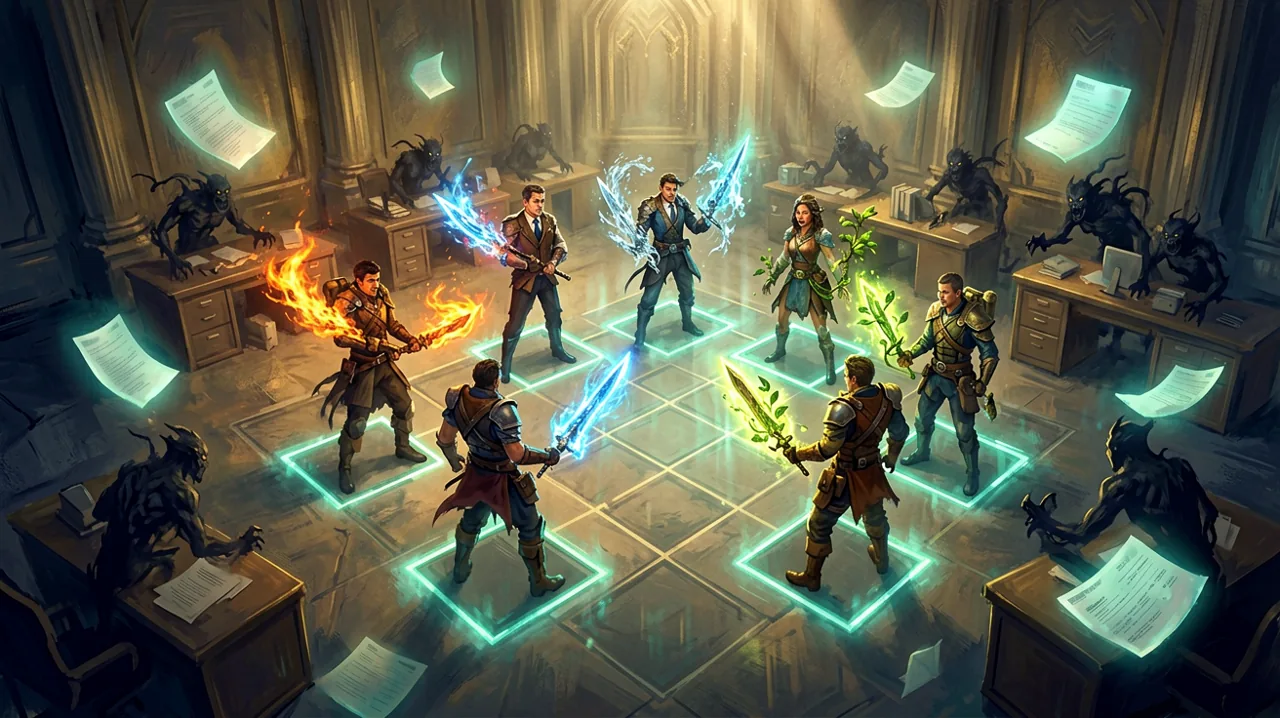
If you had told the tactical RPG community a year ago that their next major obsession would involve processing insurance claims and maintaining a corporate dating profile, you probably would have gotten some strange looks. Yet, Ledgerbound has officially arrived on Steam, and it is immediately clear why it was one of the most highly anticipated releases of the year. Developed by OmniMegaSuperCorp—a studio founded by the brilliant minds behind the chaotic, managed democracy of Helldivers 2—the game trades orbital drop pods for weaponized bureaucracy.
The result is a bizarre, deeply engaging hybrid. It takes the grid-based tactical combat of Fire Emblem, coats it in a thick layer of vicious corporate satire, and tops it off with a social simulator that actively encourages highly questionable workplace romances. The launch trailer perfectly summarizes the entire experience with three simple directives: “Deny the claim. Save the world. Maximize Shareholder value.”
The OmniMegaSuperCorp Pedigree
When analyzing the track record of the directors who previously worked on a massively popular co-op shooter, the tonal shift to a turn-based tactical RPG might seem jarring at first glance. However, the shared DNA between the two titles is unmistakable. Both projects rely heavily on a rock-solid foundation of pitch-black comedy and unrelenting anti-corporate satire. While their previous work had players dying repeatedly for the fictional glory of a unified Earth, Ledgerbound places you in the uncomfortable, sensible shoes of Rayna, an insurance adjuster for the massive Heroes United Life Group (HULG).
In the sprawling fantasy world of Eldarra, legendary heroes have a nasty habit of getting themselves killed by ancient evils, and someone has to eventually pay out their exorbitant life insurance policies. That is where Rayna comes in. Your overarching goal isn’t necessarily to save the kingdom out of the goodness of your heart; you are stepping onto the battlefield to find legal loopholes. By proving that the fallen adventurers were acting negligently when they were devoured by the monstrous Vacari, you can successfully deny their claims and protect HULG’s bottom line. It is an incredibly cynical premise that feels right at home coming from this specific development team, turning the traditional heroic fantasy narrative completely upside down.
Tactical Grid Combat Meets Bureaucratic Red Tape
The actual combat is surprisingly rigorous and demands your full attention. The developers do not just use the office setting as mere window dressing; they weave corporate mechanics directly into the tactical framework. The battlefield operates on a classic grid system, complete with positional flanking, environmental cover, and a strict elemental weapon triangle based on Fire, Water, and Plant affinities.
However, the layers of complexity go far beyond just matching elemental weaknesses against the Vacari hordes. You have to constantly manage the Sigil board mechanics, which act as dynamic environmental hazards and buffs that can completely shift the momentum of a fight. Positioning your team of adjusters is only half the battle. The other half involves executing specific Optional HR Objectives during the skirmish. These mandates might require you to finish off an enemy using a highly specific elemental combo, or complete the encounter under a strict turn limit. Satisfying these corporate goals rewards you with valuable company vouchers, which can be spent back at the office to secure potent corporate gear for your squad.
Then there is the Burn-Out system, which serves as the game’s harsh reality check on time management and stamina. Push your team too hard without letting them file their mandatory PTO requests, and their stats will plummet on the battlefield. It forces a highly methodical approach to the tactical puzzle. You cannot just brute-force your way through encounters; you must balance the sheer damage output of your casters against their mental exhaustion.
For those looking to optimize their performance on the grid without drawing the ire of upper management, reading up on the combat system explained guide will help you leverage the Fire, Water, and Plant interactions without triggering a disciplinary hearing.
HR-Approved Romances and Community Obsessions
When the swords are sheathed and the spreadsheets are finally closed for the day, the game leans heavily into its social simulation mechanics. Navigating the treacherous waters of office politics is practically mandatory, and forming bonds with your coworkers provides tangible, crucial benefits on the battlefield. The game features a colorful cast of romanceable companions, including the aristocratic Prince Avarice, the enigmatic Cazian, and the ever-charming Jazz.
Based on early community reports and discussions, there is already a clear fan favorite dominating the conversation. Over on the YuriAsylum subreddit, players are aggressively praising a specific character described as an “evil shareholder who ascended after getting too rich.” The general consensus among players is a collective willingness to overlook her terrible corporate ethics simply because of her excellent character design. It is a hilarious reflection of the game’s sharp character writing. The developers clearly knew exactly what they were doing when they designed the cast, blending traditional, high-fantasy archetypes with recognizable, often toxic, office personalities.
These social links require careful maneuvering. You are constantly balancing your quest-life balance, deciding whether to spend your limited downtime resting to reduce your Burn-Out levels, or schmoozing with your coworkers to unlock potent synergy attacks. Before you accidentally commit an unrecoverable HR violation, reviewing the companions and romance guide is highly recommended.
Navigating Launch Day Quirks and Hotfixes
As with any ambitious launch, the game stumbled slightly out of the gate with a few technical hiccups, but OmniMegaSuperCorp has already rolled out Patch #1 to address the most glaring issues. True to form, even the official patch notes are dripping with corporate snark. The developers proudly announced that the “Shareholders continue to improve your Software Product,” while noting that they are actively watching the development team overwork themselves to fix the remaining bugs.
The hotfix resolves several critical battle freezes that were severely halting progression. Specifically, players should no longer find themselves permanently stuck during the Emberworks encounter, or the Landfill battle featuring the wounded casters (the Flaming Out sequence). They also squashed a nasty bug related to the Consume Rift ability in the Elderhold. If you were one of the unlucky adjusters who had their save file temporarily bricked by these encounters, the official recommendation is to utilize the “Reset Battle” feature—which the patch notes hilariously clarify is, in fact, a real button that exists in the settings menu.
Audio tweaks were also a major priority, with the “Elderstone” track receiving an update that purportedly contains “36% more stone,” alongside fixes for specific ability sound effects that simply refused to trigger at launch.
While the current build is reportedly still lacking native support for super-ultrawide monitors and windowed mode, the immediate response from the developers shows a strong commitment to polishing the experience quickly. For those jumping in this weekend, keeping an eye on the patch notes and version history will be essential to ensure your software is fully compliant with company standards.
Climbing the Corporate Ladder
It is rare to see a tactical RPG take such a massive swing with its narrative framing and actually stick the landing. Ledgerbound stands as solid proof that there is plenty of room for innovation within the grid-based combat genre, especially when you inject it with razor-sharp writing and a genuinely unique premise. The pedigree of the development team shines through not just in the tight gameplay mechanics, but in the unrelenting, spectacular commitment to the bit.
Whether you are meticulously planning your next move on the Sigil board to exploit a Vacari elemental weakness, trying to woo an ascended evil shareholder by the water cooler, or simply trying to figure out how to write off a healing potion as a legitimate business expense, the game consistently delivers on its promises. The studio has successfully weaponized middle management, and it turns out that makes for an exceptionally good video game.
If you are just starting your career at HULG and want to hit the ground running, make sure to read up on our beginner tips to ensure your first week on the job does not end in immediate termination. Deny the claim, save the world, and happy adjusting.