Overview
The Caster Civil War: Why Ledgerbound's Bureaucracy Exists
A source-led, spoiler-conscious explanation of the Caster Civil War and the postwar origins of the Bureaucracy in Ledgerbound's official history.
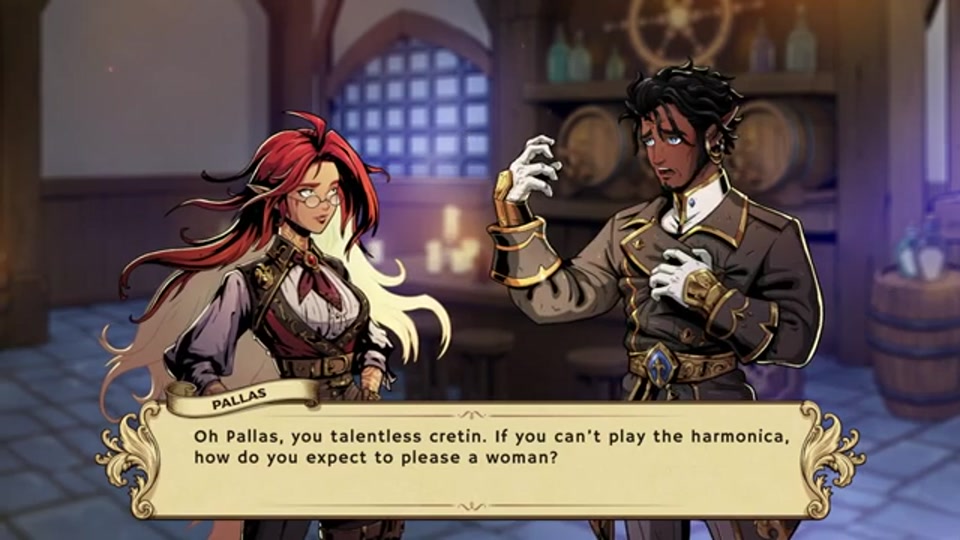
The Caster Civil War is a named event in Ledgerbound’s official historical account. Its public importance is not that the developer has released a complete war chronicle; it is that the post says the Queendom established the Bureaucracy to restore order and peace of mind afterward. That link gives the game’s office satire a historical foundation. Procedures, protocol, and records are not presented as random modern jokes; they are an institutional response to a past conflict in Eldarra.
What the official source says
OmniMegaSuperCorp’s Bureaucratic Society history states that, after the Caster Civil War, the Queendom established its beloved Bureaucracy. It says that complex procedures were developed to standardize every aspect of life, documentation became central, and the Ministry of Paperwork was created to chronicle important matters. These claims are direct context for the setting’s bureaucratic vocabulary.
The source does not identify all sides of the war, list its battles, describe its causes in full, or state which individual characters participated. A page that fills those gaps from guesswork may look comprehensive, but it would be inventing history. This guide therefore focuses on the public consequence: a society emerging from conflict and attempting to create predictability through institutions.
Why a postwar bureaucracy matters to the premise
In many fantasy settings, official forms and ministries are a brief gag. In Ledgerbound’s published history, bureaucracy is attached to a need for order after the Caster Civil War. That makes it possible to read the satire on two levels. A policy can be funny because it is absurdly formal; it can also be meaningful because the setting has a historical reason to value standardization and records.
This does not require a player to approve of every institution or assume every rule is effective. The official post does not make that moral argument. It supplies context, leaving the game free to show how people experience systems, where systems help, and where they become burdensome. A good lore guide should do the same: explain the stated history without assigning a verdict that the source does not give.
Casters and social infrastructure
The same history later describes Casters as providing basic needs and helping society enter an era of prosperity. Placing that information near the Civil War suggests that magic is not a private background detail. It can shape social stability, material life, and the way a government imagines order. But the post does not say that the war was caused by every Caster, that all magic is dangerous, or that a specific ability is politically regulated.
Avoid turning a broad historical term into a character judgment. If a scene gives a Caster a particular point of view, read that scene on its own terms. If a guide claims an exact gameplay role or trait, it should cite current in-game evidence. The public history gives context; it does not replace individual stories or mechanics.
For the astronomical and prosperity context, see Casters, three moons, and eclipses. For institutions that emerged after the conflict, see the Queendom and Ministry of Paperwork.
Standardization is not the same as a game system
The official history says procedures standardized life in Eldarra. It does not prove that every player decision is graded by a bureaucracy, that each quest has a form, or that a mission’s optional objective belongs to a named Ministry. Those could be fun interpretations, but they are not documented rules. The game’s current mission text and tutorial define its actual objectives.
This distinction protects players from stale or fabricated advice. If an encounter shows an objective, read the visible condition. If a source names an institution, use it to understand the setting. Do not use an in-universe history paragraph as a replacement for a UI explanation. Our optional HR objectives guide sets out a safe way to approach visible tasks without claiming an unverified reward economy.
Reading official history as an in-world document
The lore announcement itself uses an institutional voice. That is part of its charm, but it is also a cue to think about perspective. A historical record can convey real facts while choosing its own emphasis. The page establishes the developer’s public worldbuilding; it does not necessarily answer every question a later character might raise about memory, authority, or policy.
You do not need to solve that ambiguity before playing. Notice who describes the war and what they say about its aftermath. If the game later presents a different angle, that does not make the official history useless—it makes the setting richer. A spoiler-light guide should prepare you to read such differences, not tell you in advance which account “wins.”
Questions worth asking, without seeking spoilers
If you want more context, ask narrow questions. What does the public history say about the Bureaucracy? Which event does it name as its origin? What terms are present in a current scene? Those questions can be answered from the cited source. Asking for the “real cause” of the Civil War, the identity of every participant, or its final consequence may invite story information a first-time player did not want.
When reading community posts, look for whether they link to official text or identify their source as a late-game scene. A statement can be interesting and still be a spoiler or theory. Date and label information are not cosmetic; they tell you whether a claim is historical context, a version-specific observation, or an interpretation.
The broader history cluster
The Caster Civil War sits between other public milestones: migration to Eldarra, the formation of the Queendom, the return or memory of the Vacari, and later prosperity associated with Casters. Our Myowan history guide and Hy’oth and Weft guide cover the earlier published context. Reading those pages as a cluster gives you a grounded sense of the world while leaving plot scenes intact.
Bottom line
The official account identifies the Caster Civil War as the event after which the Queendom built a Bureaucracy to restore order and peace of mind. It supports a clear interpretation of why protocol and paperwork matter in Eldarra. It does not support a complete war history, a universal gameplay rule, or a spoiler-heavy character theory. Use the source for context and let the released game provide the rest.
Frequently Asked Questions
What is the Caster Civil War in Ledgerbound?
The official history names the Caster Civil War as the conflict after which the Queendom established the Bureaucracy to restore order and peace of mind.
Does this guide explain the full war?
No. The cited public source provides postwar context, not a complete chronology, all participants, or later plot revelations.
What did the Bureaucracy do after the war?
The official lore says it developed procedures to standardize life and established the Ministry of Paperwork to chronicle matters of importance.