Overview
Hero's Insurance and the Insurance Adjuster Premise in Ledgerbound
Why insurance matters in Ledgerbound's official setting, how Hero's Insurance connects to Rayna's public premise, and what the sources do not establish about gameplay.
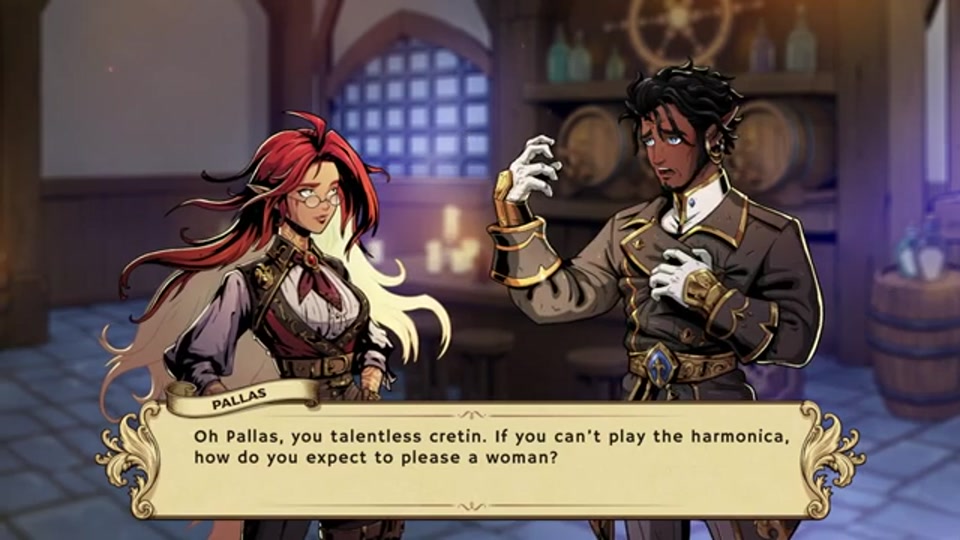
The insurance-adjuster premise is one of the clearest ways Ledgerbound distinguishes itself from a standard fantasy adventure. The official Steam page asks players to act as an insurance adjuster who must leave a desk job when an ancient enemy threatens life as they know it. The official history adds that insurance is especially important for risky professions in Eldarra and that Hero’s Insurance is a lucrative market. Together, these sources show why policy language, paperwork, and professional risk belong in a story about saving the world.
The public premise in plain language
The store description introduces the player through an ordinary professional role, then places that role beside an extraordinary crisis. This is not an incidental backstory detail. It frames the game’s corporate-fantasy satire: heroic action, financial responsibility, workplace expectations, and personal relationships all occupy the same world. Rayna’s starting job gives the story a lens through which to ask what “risk” means when magic and immortality are part of daily reality.
That lens should not be confused with a complete gameplay specification. The cited sources do not enumerate every claim, policy, price, or dialogue outcome. They do not say that the player must deny a fixed number of claims, that a specific choice changes an insurance score, or that every battle is resolved through paperwork. Those claims would need current, direct evidence from the released game.
Hero’s Insurance in Eldarra’s history
The official Bureaucratic Society post says that insurance is important, especially for riskier professions, and calls Hero’s Insurance a lucrative market. That tells us insurance is a real institution within Eldarra, not merely a modern joke transplanted into fantasy. In a world where heroes, dangerous work, and an immortal enemy exist, the setting treats risk as something people attempt to document and manage.
The historical context makes the satire more coherent. Earlier in the same source, the Bureaucracy is established after the Caster Civil War to restore order and peace of mind. Protocol becomes a foundation of Society. Hero’s Insurance can therefore be read as one expression of a culture that responds to danger with institutions, documentation, and markets. This is an interpretation of the public history, not an assertion that every fictional policy is just or effective.
Why a desk job belongs in a fantasy RPG
The premise creates contrast. Many fantasy games begin with a soldier, outlaw, mage, or royal figure. Ledgerbound begins from a job associated with assessment, evidence, and responsibility. That does not make the protagonist less suited to adventure; it changes the questions the game can ask. What does a workplace do when its employee is asked to face a world-threatening problem? How does professional language change the way people discuss heroism? When does a procedure offer security, and when does it become absurd?
Those are thematic questions, not hidden mechanical promises. A reader should enjoy the premise without assuming that every form they encounter has a particular stat effect. The game’s writing can use corporate language for comedy, character insight, or dramatic tension. Current in-game text—not a generic insurance assumption—defines what an individual scene asks you to do.
Avoiding claim-system speculation
Because the premise is memorable, old previews and search snippets may confidently describe a detailed claim-denial loop or a specific insurance minigame. Unless an official current source shows the system, do not treat it as a confirmed feature. Marketing phrasing can explain the setting without documenting every interactive layer. A trustworthy guide says what is public and leaves uncertain mechanics marked as uncertain.
If you encounter a visible claim, policy, or objective in the game, read the exact wording and reward on the build you are playing. Do not infer its rules from a lore paragraph. If it is a mission task, use the same careful process described in our optional HR objectives guide: identify the stated condition, test one factor at a time, and separate a real bug from a strategic trade-off.
Rayna and the institution
Rayna’s official public profile and cast credit make the insurance-adjuster framing personal. She is not merely standing next to a company logo; the premise positions an employee at the centre of a crisis. Our Rayna profile confirms the public information and Heather Gonzalez’s voice credit while avoiding invented route and combat details. That separation matters: a job title can set the story’s tone without deciding who the character is or what choices a player will make.
The broader cast and relationship premise give the workplace further social weight. People can be coworkers, allies, friends, or more, but a character credit does not tell us each relationship’s rules. Use source-labelled material if you want details; otherwise let the game introduce them at its own pace.
Heroism, paperwork, and scale
The public store description pairs battling evil enemies, filling out paperwork, rescuing a company from financial ruin, and HR-approved relationships. The tone is comic, but the combination has a serious structural purpose: it makes world-saving an activity with institutional consequences. A battle can matter to the world; a company can matter to its employees; a policy can matter because someone must live with its result.
Do not mistake that thematic richness for a promise that every option has one correct ethical answer. The official source tells us that decisions matter, not how every decision should be judged. A spoiler-free player can respond to the context in front of them. A completion-focused player can later seek a versioned, clearly labelled guide without pretending the first route was a mistake.
Where to get current practical information
For the released game’s technical status, use the newest official patch note; the first launch hotfix lists specific fixes and known issues. For availability, system requirements, and supported platforms, use the live Steam page. For public setting history, use the Bureaucratic Society announcement. These sources answer different questions, and mixing them creates the sort of stale information this site is designed to avoid.
Our Patch #1 guide covers the post-launch technical record. The Queendom and Ministry guide covers the postwar institutional history. Together they provide context without inventing a claim-system walkthrough that no official source has published.
Bottom line
Hero’s Insurance is a confirmed part of Eldarra’s public setting, and the player is publicly framed as an insurance adjuster who is pulled from a desk job into an ancient crisis. That is enough to explain the game’s distinctive corporate-fantasy voice. It is not evidence for a fully specified insurance simulator. Read current game text for mechanics, official history for lore, and let the story show how one employee handles a world that makes heroism a professional risk.
Frequently Asked Questions
Why is the player an insurance adjuster in Ledgerbound?
The official Steam description frames the player as an insurance adjuster who must leave a desk job when an ancient enemy threatens life as they know it.
What is Hero's Insurance?
The official history describes insurance as important for risky professions and calls Hero's Insurance a lucrative market in Eldarra.
Is there a full insurance-claim simulator?
The cited sources establish the premise and setting role of insurance, not a complete current gameplay simulation or fixed claim-denial system.