Overview
Heroes United Life Group (HULG): Ledgerbound's Corporate-Fantasy Employer
A source-led introduction to Heroes United Life Group, the company language in Ledgerbound's public premise, and how to read HULG satire without inventing hidden systems.
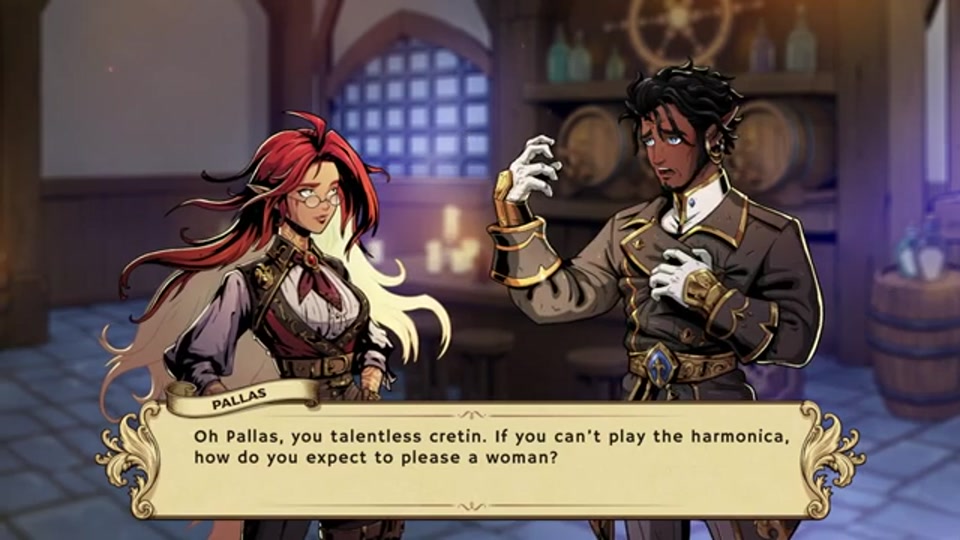
Heroes United Life Group, often shortened to HULG, is a key piece of Ledgerbound’s corporate-fantasy language. OmniMegaSuperCorp uses the name in its official promotion while presenting heroes as employees and adventure as a job with professional expectations. The Steam store description similarly combines battles, paperwork, financial risk, and HR-approved relationships. This page explains the public framing without pretending that a marketing name is a full corporate chart, quest database, or mechanical system.
The official HULG reference
The developer’s romance-cast promotion speaks in the voice of Heroes United Life Group and calls the player a contractually obligated hero. That reference is useful because it makes the setting’s joke concrete: heroism is not only a personal calling or mythic destiny; it can be treated as employment. The player is situated in a world where companies, representatives, performance language, and fantasy danger share a single vocabulary.
The source does not publish every division, manager, policy, or internal conflict. It does not prove that a particular character runs HULG, that a specific office is a combat faction, or that every corporate phrase has a hidden score attached. A reliable guide should let the name do what the source supports—establish premise and tone—then leave undisclosed details for the story or direct game evidence.
Why the company framing matters
The official store page describes a world in which you can battle evil, fill out paperwork, rescue a company from financial ruin, and pursue HR-approved relationships. HULG provides a way to connect these ideas. A company can make risk, duty, and promotion part of how people talk about a fantastical crisis. The comedy comes from the collision of familiar office language with stakes that would normally belong to epic fantasy.
That collision also adds texture. A workplace can be a source of friendship, obligation, absurdity, pressure, and institutional power. The public premise does not tell you that HULG is simply benevolent, simply evil, or secretly one thing. It tells you that corporate language matters. Let individual scenes and characters establish their own relationship to the employer rather than relying on a generic “companies are villains” assumption.
HULG and Hero’s Insurance
The official history says insurance is important for risky professions and calls Hero’s Insurance a lucrative market. The store description starts the player as an insurance adjuster. HULG’s public name fits within that setting: the work of a hero can be discussed through group membership, contracts, risk, and professional duty.
This does not prove a full insurance-claim simulator or a fixed benefit system. A source describing Hero’s Insurance is a lore source. A visible in-game objective or menu is a mechanics source. Use them for different questions. Our Hero’s Insurance guide explains the distinction and avoids turning satire into unsupported game rules.
Reading company language in context
When HULG or similar terms appear, ask who is using them. Is it an official announcement, a character talking about a job, a historical document, or a joke in the marketing voice? A single phrase can function differently in each context. A company slogan may establish tone. A character complaint may reveal their personal experience. A mission prompt may define a concrete current task. Treating all three as identical leads to bad lore and worse strategy advice.
This is not an instruction to distrust every in-world document. It is a reading habit that respects the game’s satirical design. The Bureaucratic Society history gives Eldarra’s institutions a public past, while HULG gives the player-facing workplace premise a recognizable name. Both can be meaningful without becoming a spoiler theory about every decision.
Relationships and the corporate joke
The official promotional material pairs HULG-style workplace language with romance coverage. That makes a relationship system part of the satire, but it does not identify every route condition or prove that a given character’s job title determines their availability. An “HR-approved” phrase can be humorous worldbuilding, a formal rule, or a piece of marketing copy depending on context. Do not use it to make a claim that a source has not made.
For confirmed public relationship information, use our companions and romance guide. It names the officially promoted eligible characters and makes its evidence boundary clear. For a first run, let the game introduce the people and the workplace around them at its own pace.
Work, pressure, and quest-life balance
The store description also frames limited time as a choice between nurturing relationships and improving as a tactician. HULG provides the corporate language for that tension, but a player does not need to play as if every evening is a performance review. Choose a goal for the session—story, tactics, rest, or exploration—and use current game text to judge visible choices. The final demo’s reference to Burn Out shows that the developer considered time and pressure important topics, not that a public announcement publishes exact thresholds.
Our quest-life balance guide covers this practical approach. It avoids a made-up calendar and helps keep a game about work from becoming unpaid homework.
Do not infer technical support from the setting
A corporate name can make a support problem sound like a humorous HR issue, but a freeze, audio problem, or load loop is still technical. The first launch hotfix documents specific fixes and known issues. Check the newest official patch note, record your version and circumstances, and use documented recovery paths where they apply. Do not treat an error as an in-universe feature or follow an unofficial file edit just because it fits the company’s comic tone.
HULG in the wider lore cluster
HULG connects the player-facing employment premise to the institutional setting of Eldarra. The Queendom and Ministry of Paperwork guide explains the official historical roots of Bureaucracy and protocol. The Caster Civil War guide covers the public postwar context. Together, these pages explain why company language feels at home in a fantasy world without assigning unconfirmed motivations to any current organization.
Bottom line
HULG is the public corporate frame around Ledgerbound’s heroes, contracts, and workplace satire. It helps explain the game’s blend of professional language and fantasy stakes. The name alone does not reveal a complete company structure, a hidden progression system, or a story outcome. Use official materials for the premise and let the released game reveal the people and institutions behind it.
Frequently Asked Questions
What does HULG mean in Ledgerbound?
HULG stands for Heroes United Life Group in OmniMegaSuperCorp's official promotional language. It is part of the corporate framing around heroes and insurance.
Is HULG a confirmed gameplay faction?
The sources establish HULG as part of the game's public workplace premise; they do not by themselves document every gameplay faction, benefit, quest, or progression rule.
Why does Ledgerbound use workplace language?
The official store and announcements combine heroic combat, paperwork, company financial risk, and HR-approved relationships as part of the game's corporate-fantasy satire.