News
Navigating Romance Forms and Monogamy Locks in Ledgerbound
Wondering if submitting a romantic relationship form for Jazz locks you out of Prince Avarice's route? Here is how monogamy and endgame romance locks work in Ledgerbound.
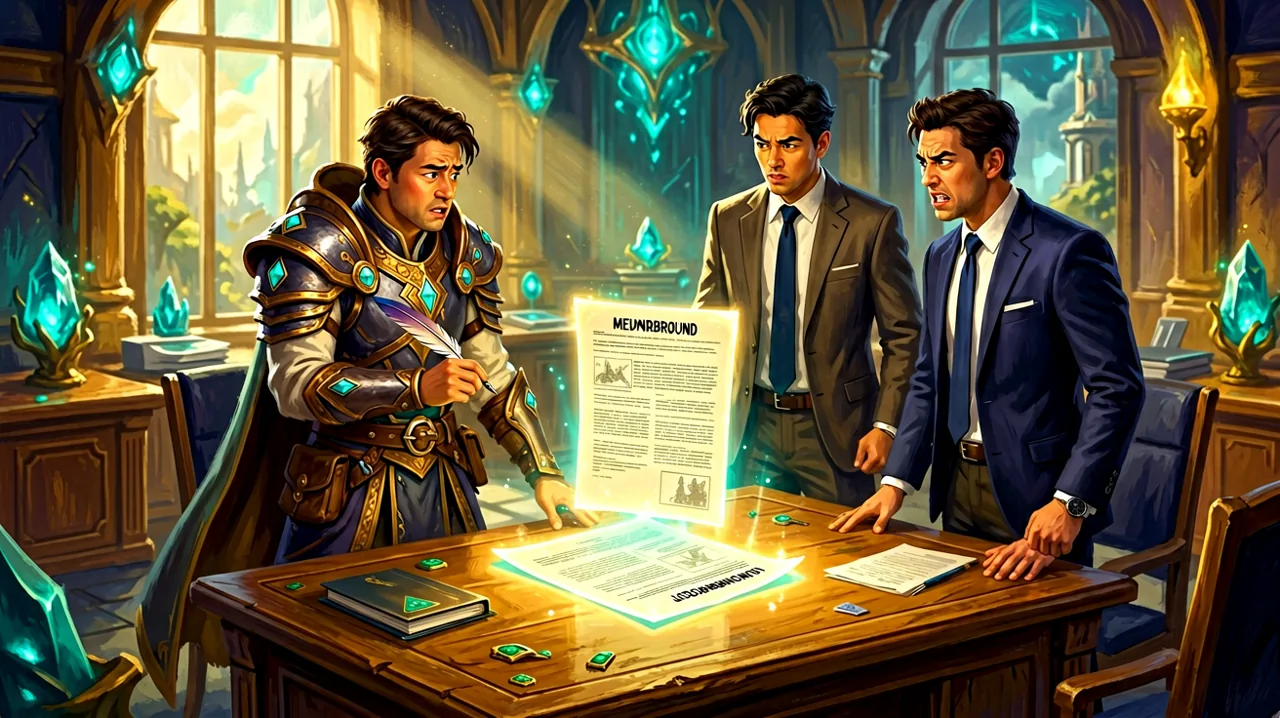
Navigating the murky waters of office romance is dangerous enough in the real world, but when your employer is the Heroes United Life Group (HULG) and your coworkers are heavily armed magic users fighting Vacari abominations, the stakes are significantly higher. Players pushing through the mid-to-late stages of Ledgerbound are discovering that the game’s approach to companions and romance is far more bureaucratic than your standard tactical RPG. Instead of simply picking a flirtatious dialogue option and watching a cutscene, you are eventually asked to submit official HR paperwork to declare your relationship status.
This unique mechanic has led to a wave of panic across the community. Players who thought they were casually exploring their options are suddenly finding themselves locked out of specific character routes or entirely missing the elusive endgame scenarios. The core of the confusion revolves around the “Relationship Declaration Form” and the strict monogamy clauses attached to certain characters in the revealed romance cast.
If you are staring at a pending form for Jazz and wondering if clicking “Romantic” will ruin your chances with Prince Avarice, or if you are trying to figure out why the mysterious male Shareholder ending didn’t trigger, you need to understand exactly how HULG processes your personal life.
The Bureaucracy of Love: Understanding the HR Form
In most role-playing games, locking into a romance happens organically through a culminating conversation or a specific gift. Ledgerbound satirizes this by tying your affection directly to corporate liability. Once your bond with a companion reaches a critical threshold through camp conversations and field actions, you will receive a prompt to formalize the relationship.
This isn’t a casual chat; it is the Relationship Declaration Form. The game explicitly asks you to designate the nature of your connection as either “Platonic” or “Romantic.” According to extensive community testing, this is not a drill, nor is it a status you can easily revoke. Filing this paperwork alters the underlying flags in your save file. It updates your status in the HULG database, which in turn influences future dialogue, combat synergies, and narrative availability.
When you select “Platonic,” you are effectively friend-zoning that character permanently for the current playthrough. You solidify their role as a trusted colleague, unlocking their top-tier platonic support abilities, but you close the door on any romantic Resterlude events. When you select “Romantic,” you declare them as your partner. However, because this is an official declaration, the rest of the company—and your other companions—will eventually recognize this status. This is where the route lockouts begin.
The Jazz Conundrum and Order of Operations
A frequent question dominating community forums right now involves the overlap between early-game flirts and late-game locks, specifically regarding characters with different views on exclusivity. A prime example is the tension between choosing Jazz and holding out for Prince Avarice.
Many players naturally progress Jazz’s bond early on. When Jazz’s form appears in your inbox, the temptation is to check the romantic box to see the immediate narrative payoff. However, players are reportedly finding that doing so has severe consequences down the line. The question is: If I end up clicking romantic relationship for Jazz before I get far with Avarice, do I get locked out of romance with Avarice?
Based on current community consensus, the answer is heavily leaning toward yes. While Ledgerbound allows you to flirt casually and pick slightly suggestive dialogue options with multiple characters early on, the Relationship Declaration Form is the hard cutoff. If you file a romantic form for Jazz, HULG registers you as being in an active workplace relationship.
When you later attempt to progress Avarice’s storyline, the game checks your HR file. If it sees an active romance, Avarice’s corresponding romantic form may reportedly fail to generate, or he may initiate a unique dialogue confronting you about your existing commitments. In a game that heavily emphasizes choices and consequences, sequence breaking your paperwork is a fast track to getting locked into a route you might not have fully committed to.
The Monogamy Clause: Prince Avarice’s Strict Exclusivity
The reason filing paperwork for Jazz causes such an issue with Avarice comes down to character-specific boundary coding. Not all companions in Ledgerbound view relationships through the same lens, and the developers have built these personality traits directly into the route mechanics.
Prince Avarice is widely reported by the community to be strictly monogamous. His background, tied to the rigid aristocratic structures of Eldarra’s society, means he does not share, and he certainly does not tolerate bureaucratic overlap. For Avarice to even consider entering a formal romantic relationship with your character, your HR file must be completely devoid of any other romantic declarations.
If you want to romance Avarice, you must exercise extreme discipline during the mid-game. When the forms for other characters—whether it’s Jazz, Cazian, or anyone else—arrive, you must actively check the “Platonic” box, or at the very least, leave the forms pending and unsubmitted if the game allows you to delay the paperwork. Some players have reported that leaving forms pending for too long can negatively impact morale or trigger “burn-out” related stress events, but it is currently the safest reported strategy to keep Avarice’s route viable until his specific form drops.
If you attempt to cheat the system by holding multiple forms and trying to submit them simultaneously, the game’s internal logic will reportedly process them sequentially, applying the monogamy lock the moment the first romantic declaration goes through. HULG’s servers do not crash easily, and they will enforce the exclusivity clause.
The Endgame Impact: Party Members vs. Shareholders
The consequences of your paperwork extend far beyond camp conversations; they dictate the very final hours of the game. A significant discussion is currently unfolding regarding the endgame variations, specifically the difference between standard party member endings and the elusive “Shareholder” endings.
In the intricate corporate hierarchy of HULG, field agents and companions occupy a very different space than the corporate executives and shareholders. Players who have rolled credits are discovering that the game features specific narrative conclusions tied to these high-ranking corporate figures. Notably, there is a highly sought-after “good ending” involving the male shareholder, which offers a vastly different perspective on the game’s climax compared to riding off into the sunset with a fellow insurance adjuster.
However, players are running into a massive roadblock: you reportedly cannot achieve the shareholder ending if you are romantically bound to a strictly monogamous party member.
One player recently noted that after finishing the game with a monogamous party member’s ending, they realized they were entirely locked out of choosing the male shareholder in the finale. The narrative logic here is sound within the game’s satirical framework. A strictly monogamous field companion is not going to stand by while you sell out your team dynamics to cozy up to the C-suite, nor will a corporate shareholder view an adjuster entangled in inter-party romance as a viable partner for executive promotion.
If you are aiming for the shareholder ending, community theorycrafters strongly suggest that you must either keep your relationships strictly platonic across the board, or only engage with companions who are confirmed to be open to non-exclusive arrangements (though whether any companion fully tolerates a shareholder pivot remains a subject of intense community testing).
Best Practices for Managing Your HR Romance File
Given the finality of the forms and the strict exclusivity demanded by characters like Avarice, you need to approach relationship building with the same careful planning you bring to tactical puzzle battles.
First, utilize manual saves aggressively. Before you submit any Relationship Declaration Form, create a hard save. The game does not offer an easy “breakup” button once the paperwork is filed—doing so would likely require navigating a nightmare of HR severance forms that currently do not exist in the game.
Second, pay close attention to the subtle cues during Resterlude dialogues. Characters will often telegraph their views on loyalty, corporate structure, and exclusivity long before the form appears. Avarice’s rigid worldview is a clear indicator that he will not tolerate a messy HR file.
Finally, decide on your endgame goal early. If you want to see the male shareholder ending, you must prioritize your corporate standing over your field romances. It requires treating your companions strictly as colleagues, filling out those Platonic forms diligently, and keeping your record clean for executive review.
Ledgerbound successfully turns romance into a strategic resource management puzzle. It forces you to think about the long-term consequences of every flirtation, proving that in Eldarra, a poorly timed HR form can be far more devastating than missing a 90% chance to hit on the tactical grid. We will continue to monitor community testing and update this information as exact triggers for the shareholder endings are fully confirmed.