News
Ledgerbound Patch 6 Revamps Battle Barks and Eases Burnout Penalties Just in Time for RPG Fest
The latest Ledgerbound update improves party banter logic, reduces punishing replay costs for casual players, and brings back the free demo for Steam's Party-Based RPG Fest.
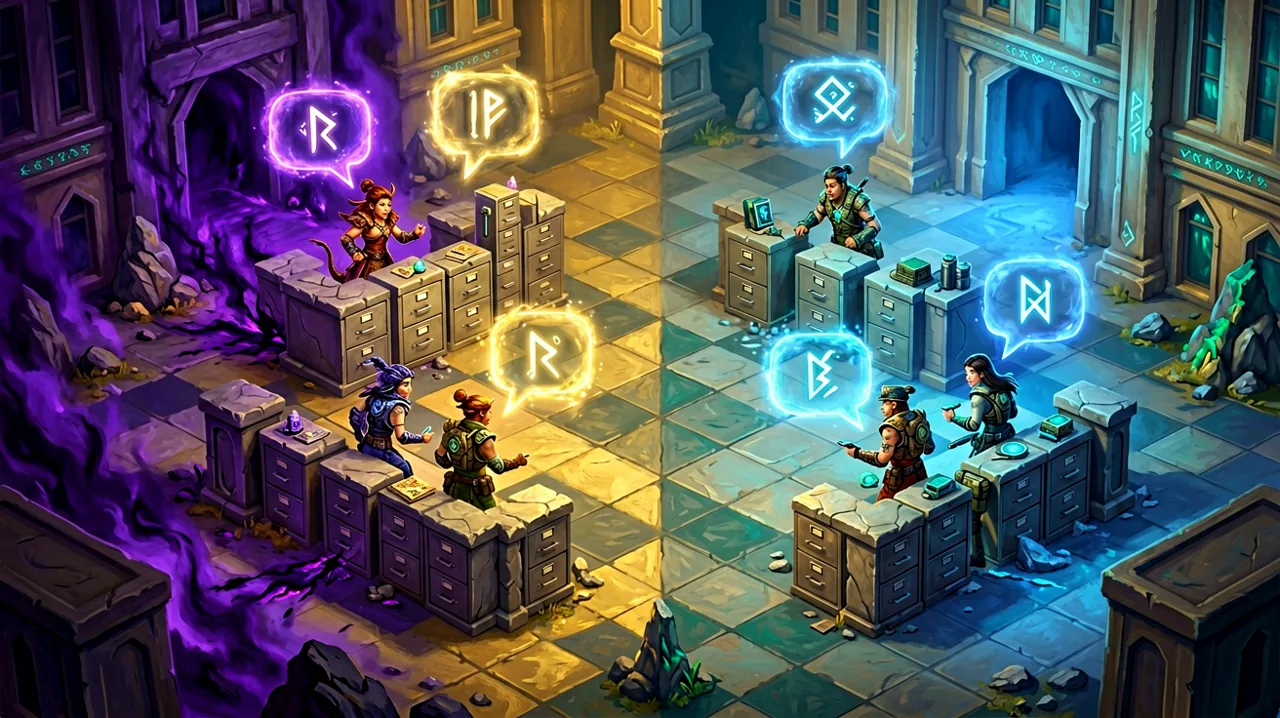
OmniMegaSuperCorp’s unique corporate fantasy tactical RPG continues its steady post-launch refinement with the deployment of Patch 6, appropriately titled “Barks & Burnout.” Since its debut earlier this summer, the game has established a dedicated audience by blending unforgiving grid-based strategy with the soul-crushing administrative realities of a magical human resources department. This latest update addresses some of the more abrasive elements of the employee experience while simultaneously injecting more narrative life into your adventuring party.
Crucially, the developers have also dropped a fresh lure for prospective insurance adjusters: a limited-time playable demo coinciding with the Steam Party-Based RPG Fest, running until September 21. We are analyzing exactly what this patch changes under the hood and why these mechanical tweaks matter for both veteran tacticians and newcomers attempting to navigate the labyrinthine Ministry of Paperwork.
The Evolution of the Bark System
One of the standout features of the game is how its cast interacts not just in visual novel-style camp interludes, but actively amidst the chaos of the battlefield. “Barks”—the short, situational voice lines characters shout during combat—are essential for establishing personality, signaling mechanical triggers, and building party dynamics.
Patch 6 implements a significant structural overhaul to this system. The developers have added a broader variety of these mid-fight quips to the audio pool. This variety ensures that executing a combined Fire and Plant elemental strike, or triggering a specific flanking maneuver, doesn’t constantly result in hearing the exact same vocal response. Repetitive audio cues can quickly become grating in a game that demands extensive tactical maneuvering, so expanding the script here is a welcome quality-of-life adjustment. More importantly, the patch implements stricter logic gates controlling when these specific voice lines are actually permitted to play.
Fixing the Prophetic Romance Triggers
The patch notes specifically highlight a rather amusing, albeit highly immersion-breaking, narrative bug involving Pallas. Previously, the audio system would occasionally misfire and trigger combat barks where Pallas would express his distinct admiration (or, as the patch notes brilliantly describe it, “his level of simp”) for Rayna during battles that took place chronologically before the two characters had even been formally introduced in the main storyline.
While initially entertaining for the community, this kind of sequence-breaking dialogue actively undermined the careful pacing of the relationship mechanics. The narrative engine is supposed to track your interactions meticulously. If you are currently attempting to navigate the complex web of workplace romance—perhaps actively weighing your options with Rayna against the advances of Prince Avarice or Jazz—you need the game’s systems to reflect your current reality. You can now rest assured that the combat dialogue will accurately align with your current standing rather than accidentally spoiling future relationship developments or simulating affection that hasn’t been earned yet. For more on navigating these complex dynamics, check our extensive companions and romance guide.
Recalibrating the Cost of Corporate Failure
The approach to failure in this game is inherently tied to its pervasive corporate satire. Losing a tactical encounter doesn’t simply result in a traditional “Game Over” screen where you seamlessly reload your last save. Instead, failure consumes Time and actively increases the Burnout meter for your employed adjusters. This system intentionally forces players to treat every skirmish as a critical investment of company resources, demanding careful planning before committing to an attack on the Sigil board.
However, for players tackling the campaign on lower difficulties specifically to enjoy the Eldarra setting, the writing, and the visual design without engaging in brutal tactical friction, the original penalties for replaying a failed battle were proving overly punitive. The stress of managing the metagame was eclipsing the fun of the core loop.
Easing the Grind on Lower Difficulties
Patch 6 directly addresses this feedback by explicitly reducing the Time and Burnout costs associated with battle replays on the game’s more forgiving difficulty settings. This represents a massive shift in how the game handles accessibility.
Before this change, getting stuck on a particularly tricky encounter against the Vacari enemy could quickly spiral your entire campaign schedule out of control. A few failed attempts could lead to forced resting periods, missed optional HR objectives, and a severely handicapped party—all because you needed a few practical tries to figure out a specific environmental puzzle or elemental synergy.
By significantly lowering the bureaucratic overhead of failure on these specific settings, the developers are actively allowing casual players to experiment with bizarre team compositions, test untested elemental combinations, and learn from their mistakes without the constant, suffocating dread of an impending negative performance review.
The patch notes maintain the studio’s trademark snark regarding this specific balance change, noting that players who actively desire “additional stress in their lives should consider playing on higher difficulties and/or employment in software development.” This highlights a core design philosophy: the intense friction of resource management is meant to be a fundamental part of the intended challenge, but it shouldn’t completely alienate a broader audience. If you prefer the punishing, unforgiving reality of corporate mismanagement, the Uninsured difficulty remains untouched, functioning exactly as ruthlessly as it did at launch. For a deeper understanding of these settings, review our breakdown of the difficulty settings and uninsured difficulty.
Visual Polish and Precision in the Paperwork
Beyond the mechanical tweaks to audio and progression, Patch 6 brings some much-needed visual and textual clarity to the user interface. Several ability and item icons that were previously displaying as broken, missing entirely, or rendering in an unacceptably low resolution have been fully repaired.
In a tactical environment where split-second decisions heavily rely on correctly reading the UI and understanding exactly which corporate voucher or magical gear piece you are currently equipping, visual fidelity is not just about aesthetics—it’s a critical component of usability. The developers boast that these newly updated icons are now “significantly more iconic,” which should materially help players parse their crowded inventory screens much faster during intense loadout management phases.
Additionally, the localization and writing teams have swept through the ability descriptions to eradicate lingering typos. The official notes specifically call out text corrections made to the ‘Phalanx’ and ‘Last Stand’ abilities. In the context of the punishing combat system, Phalanx serves as a critical defensive formation tool, requiring precise adjacent grid positioning of your party members to maximize damage mitigation against overwhelming assaults. Last Stand, conversely, represents a high-risk, high-reward desperation mechanic triggered only when an adjuster’s health drops precipitously low.
Both of these abilities rely heavily on complex conditional triggers and specific status effect interactions. Therefore, having perfectly accurate text descriptions isn’t merely a matter of good grammar—it is about ensuring players don’t miscalculate a critical late-game turn because a vital keyword was vaguely defined or misspelled. Precision in your paperwork is mandatory. You can track how these tooltips have evolved in our patch notes and version history archive.
The RPG Fest Demo: A Lure for Prospective Adjusters
Perhaps the biggest news for the broader gaming community is the temporary return of the playable demo. Timed perfectly to coincide with the Steam Party-Based RPG Fest, this free slice of the corporate pie is available to download and play until September 21.
OmniMegaSuperCorp frames this availability with their usual sinister, hyper-capitalist tone, explicitly warning players that “nothing is ever free” and openly referring to the demo as “a lure intended to reel you in, you scrumptious little fish you.”
If you have been lingering on the fence about whether this strange blend of tactical grid combat and HR paperwork simulator is right for your specific tastes, this limited window is the perfect opportunity to find out.
Why Returning to the Demo Matters
The previous pre-launch demos were highly instrumental in gathering community feedback, but they often reflected an older, much more punitive iteration of the game’s core mechanics. The build currently available during the RPG Fest is expected to incorporate the myriad of balance tweaks, time toggle options, and UI improvements introduced over the past two months of post-launch patching.
This means that new players downloading the client today are getting the absolute most polished version of the onboarding experience available. It provides a highly representative look at the opening hours, allowing you to thoroughly test the waters with the revised combat systems, get a genuine feel for the satirical writing tone, and decide if you want to commit to a full-time position within the company. For a historical perspective on how the trial version has evolved, see our analysis of the demo vs release build.
For those jumping into the demo this week, pay extremely close attention to the elemental interactions early on. Understanding how to leverage Fire, Water, and Plant abilities on the grid is fundamental to survival. Do not ignore your positioning relative to cover and environmental hazards. Furthermore, take the necessary time to read the lore entries and dialogue carefully; much of the game’s unique charm lies in the absurd bureaucracy of the Eldarra setting. Check out our beginner tips before you start your shift.
Remember that the time management mechanics introduced in the demo are just the tip of the iceberg. However, learning to manage your initial burnout and time management effectively will set a strong foundation for success if you decide to purchase the full game and transfer your progress over.
Moving Forward
Patch 6 might not introduce massive, headline-grabbing features like a brand-new playable class or a major storyline expansion, but it represents exactly the kind of foundational, systemic maintenance necessary for a complex, systems-heavy RPG to thrive long-term.
By refining the audio feedback loop during combat, ensuring textual precision in ability descriptions, and crucially smoothing out the progression curve for less hardcore players, OmniMegaSuperCorp is actively ensuring the long-term health and accessibility of their product. As the community continues to dissect the optimal corporate builds and map out every branching narrative path, these steady, iterative improvements make the daily grind of an Eldarran insurance adjuster just a little bit more tolerable. We will be keeping a close eye on official channels for whatever new directives the Shareholders decide to deploy in Patch 7.