News
Ledgerbound's Final Pre-Launch Demo Introduces Burn Out Mechanics and Overhauled UI
OmniMegaSuperCorp has released the final pre-launch demo for Ledgerbound, featuring a new burn out mechanic, camp newsletters, and overhauled difficulty settings for the weekend.
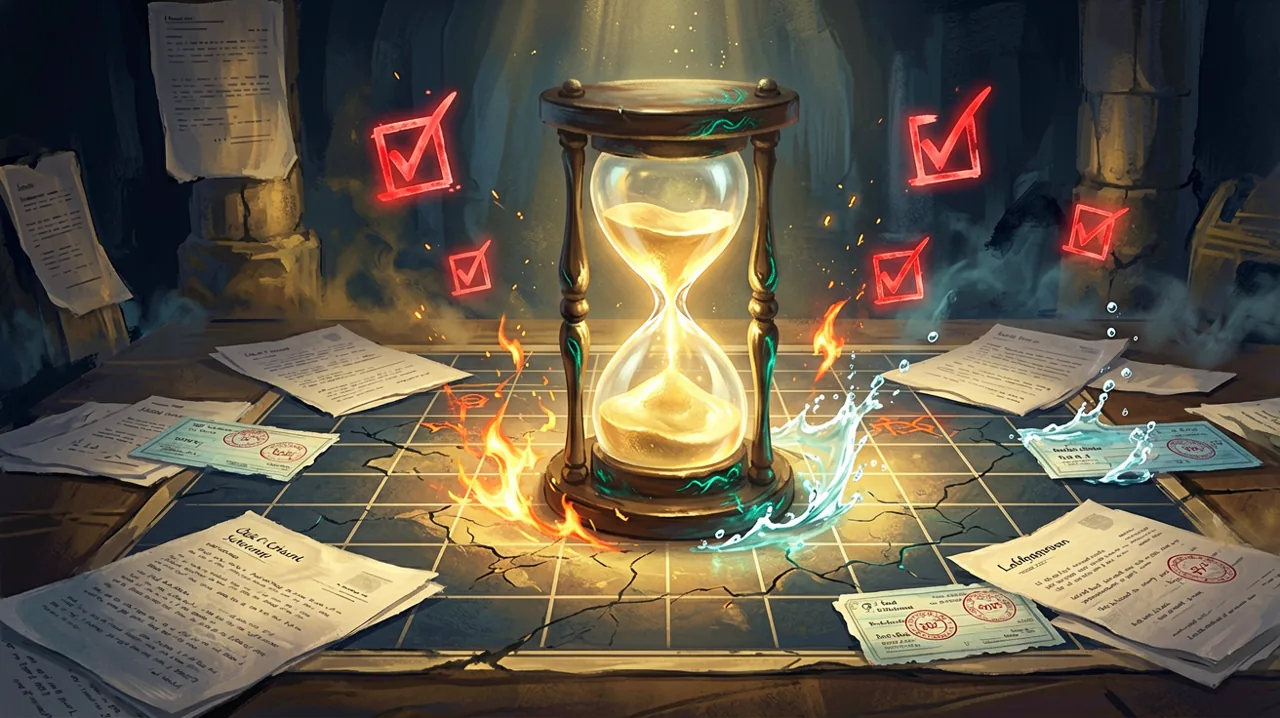
OmniMegaSuperCorp is giving players one final opportunity to clock in before the official launch. The final pre-release demo for Ledgerbound is officially live on Steam, running strictly through the weekend until Monday, July 20th. This final playtest is remarkably different from the previous Next Fest build, bringing a substantial wave of new mechanics, major quality-of-life updates, and narrative flavor that significantly changes the pacing and feel of the game’s opening chapters.
Whether you are stepping into the role of Rayna the insurance adjuster for the first time or returning to see how the tactical combat has evolved over the past few months, this demo offers a crucial look at the final shape of the game ahead of its impending August release. In this detailed breakdown, we examine the massive feature additions introduced in this build—from the intriguing “burn out” mechanic to the highly requested UI overhaul—and explain how these changes will impact your strategic approach to the corporate fantasy world of Eldarra.
The Final Polish: Why This Weekend Demo Matters
It is somewhat rare for a studio to release a brand new, updated demo build this close to launch, especially after the game already secured a massive wishlist following during earlier events. However, tactical RPGs require meticulous balancing, and the developers at OmniMegaSuperCorp are clearly utilizing this final weekend to gather actionable telemetry from the community.
They have specifically asked players to fill out a feedback survey focusing heavily on difficulty scaling, pacing, and hardware performance. This indicates that while the story content of the first few chapters is locked in, the mathematical underpinnings of the combat and resource management systems might still be receiving their final tweaks. If you want to ensure that the launch day experience is as balanced and polished as possible, participating in this demo and providing constructive feedback is the best way to contribute to the final product. The developers want to make sure the launch is something “the Shareholders will be proud of,” and that requires extensive stress-testing from weekend warriors.
Analyzing the “Burn Out” Mechanic: Corporate Stamina
The most significant gameplay addition in this updated demo is undoubtedly the “burn out” mechanic. While the exact numerical thresholds are something players will need to test on the battlefield, the thematic implications are brilliant for a corporate-themed fantasy RPG. In traditional tactical games, players manage health bars, mana pools, or action points. In Ledgerbound, managing your team’s mental and physical exhaustion appears to be a core layer of the long-term strategy.
Based on the developer’s notes requesting specific feedback on “time and burn out management,” it is highly expected that actions taken both in and out of combat will contribute to a character’s burn out meter. Pushing Rayna or her coworkers too hard across multiple encounters without adequate rest might result in severe stat penalties, reduced movement range on the grid, or a higher susceptibility to enemy debuffs. This creates a compelling risk-and-reward system for the player. Do you push your team through one more grueling encounter to secure additional vouchers and corporate gear, or do you retreat to camp to recover, potentially burning valuable in-game time?
Time management is often a defining feature of modern relationship-building RPGs. If Ledgerbound is tracking calendar time strictly, players will have to make hard choices about how to spend their limited days before deadlines. Will you spend an afternoon tackling optional HR objectives to impress upper management, or will you use that precious time to rest and lower the burn out levels of your party? The integration of workplace exhaustion into the mechanical loop of a fantasy adventure perfectly encapsulates the satirical tone of the game, turning real-world corporate fatigue into a tangible gameplay mechanic that requires careful planning to overcome.
The Social Aspect: Animated Portraits and Hat Rack Confidants
Ledgerbound isn’t just about crunching numbers and optimizing elemental attacks on a hex grid; it is fundamentally about the characters you meet and recruit along the way. The demo introduces fully animated portraits, which serves as a massive upgrade for the visual novel style dialogue scenes. Seeing characters breathe, blink, and react dynamically adds a layer of emotional resonance and polish that was missing from earlier static footage.
This visual upgrade is particularly exciting for the game’s social and relationship systems. Engaging with the companions and romance options will feel much more immersive when your coworkers are expressing their reactions with fluid animations. Flirting with Prince Avarice, strategizing with Cazian, or bantering with Jazz will carry more weight when their body language matches their witty dialogue.
Equally notable—and perhaps a bit more bizarre—is the addition of “conversations with your BFF Hat Rack.” Rayna’s trusty hat rack, which famously serves as her primary melee weapon, appears to be taking on a more prominent narrative role. Whether the hat rack is actually sentient, possessed by a magical corporate entity, or simply serving as a Wilson-esque sounding board for Rayna’s immense workplace stress remains to be seen. However, allowing players to converse with an inanimate object is a fantastic way to deliver internal monologues and exposition without breaking the comedic tone of the game. It is these quirky, unexpected design choices that set Ledgerbound apart from more self-serious fantasy epics, grounding the high fantasy in mundane office absurdity.
Worldbuilding Through Camp Newsletters
Another fascinating addition to the downtime loop is the “camp newsletters” feature. In a typical high fantasy game, you might find dusty tomes, ancient scrolls, or weathered stone tablets to read about the lore of the world. In Ledgerbound, you get internal company memos and corporate newsletters. This is a brilliant, thematic method for delivering worldbuilding and exposition without breaking immersion.
These newsletters will reportedly provide context on the broader conflicts happening across Eldarra, updates on OmniMegaSuperCorp’s shifting stock prices, warnings about the behavior of the Vacari enemy factions, and perhaps some passive-aggressive disciplinary notes from Human Resources. Reading through these documents at camp not only reinforces the overarching corporate aesthetic but also richly rewards players who enjoy exploring the deep story and setting. It transforms the traditional act of reading lore from a dry historical exercise into a satirical look at modern corporate communications. We strongly suspect these newsletters might also contain subtle hints about upcoming enemy weaknesses or puzzle solutions, making them required reading for diligent insurance adjusters looking to maximize their efficiency.
Tactical Readability: The UI Overhaul and Difficulty Settings
A common piece of community feedback during earlier preview windows was that the user interface, while incredibly stylish, could sometimes obscure crucial tactical information during complex encounters. The developers have clearly listened and adapted, as this demo features a “completely overhauled user-interface.”
For a game that relies heavily on precise grid positioning, exploiting elemental affinities (like the Fire, Water, and Plant synergies detailed in our combat system breakdown), and utilizing the unique Sigil board mechanics, having a clean, readable UI is paramount. Players should look out for clearer indicators of turn order timelines, easier access to character stat sheets, and much more distinct visual cues for area-of-effect ability ranges. A masterful UI in a tactical RPG is practically invisible; it allows the player to focus entirely on the strategy of the encounter without fighting the menus or second-guessing their ranges.
Accompanying the massive UI overhaul is the implementation of difficulty settings. This is a vital inclusion for the game’s accessibility and long-term success. Tactical RPGs often struggle to balance the needs of hardcore genre veterans—who demand punishing, complex encounters that test their limits—with the desires of players who are primarily here for the engaging narrative, humor, and romance options. By offering adjustable difficulty, OmniMegaSuperCorp ensures that players can tailor the experience exactly to their preferences. Whether you want a grueling, brain-burning test of your strategic acumen or a breezy, narrative-focused stroll through the corporate fantasy world, the new settings should accommodate your specific playstyle.
What Returning Players Should Look For
If you already poured hours into the previous Next Fest demo and feel like you have seen everything the early chapters have to offer, you might be wondering if it is actually worth reinstalling this latest build. The answer is a definitive yes.
Beyond the structural aesthetic changes to the UI and the addition of granular difficulty settings, the introduction of the burn out system completely recontextualizes all of the early encounters. Strategies that worked flawlessly previously might now leave your party exhausted and vulnerable for subsequent days. Returning players are in the absolute best position to provide the developers with comparative feedback. Pay close attention to how the pacing has shifted. Do the new portrait animations significantly change how you perceive the dialogue? Does the camp newsletter system make the downtime at camp feel more rewarding and informative? Your prior experience makes you the ideal playtester for this crucial final balancing pass.
Advice for First-Time Adjusters
If this weekend marks your very first time stepping into the well-worn shoes of Rayna, the sheer number of overlapping gameplay systems might seem somewhat daunting at first glance. Between the grid-based tactical combat, the complex elemental synergies, and the newly introduced time and burn out management mechanics, there is a lot of corporate bureaucracy to learn.
Our primary recommendation for new players is to make liberal use of the new difficulty settings. Do not feel pressured to play on the highest tactical difficulty right away; lower the challenge to get a comfortable grasp on how the Sigil board mechanics operate and how your coworkers synergize with one another on the field. Take your time reading the camp newsletters to fully understand the bizarre setting, and don’t forget to talk to your hat rack to relieve some stress. Most importantly, remember that this is just a slice of a much larger ongoing adventure. Focus on learning the rhythms of corporate combat and getting to know the colorful cast of companions.
How to Help Shape the Launch Experience
As you experience the demo this weekend, keep in mind that the developers are actively and urgently soliciting feedback. The Steam news post includes a direct link to a short survey, and they have highlighted three specific areas of immense interest to the team:
- Difficulty and Balancing: Are the encounters too punishing on the default setting? Does the game do a good job of naturally explaining its mechanics without overwhelming the player?
- Time and Burn Out Management: Does the new stamina and exhaustion system feel fair, or is it overly restrictive? Are you forced to rest too often, unnecessarily interrupting the flow of the adventure?
- Performance Metrics: While the game has relatively modest PC system requirements, testing across a wide variety of diverse hardware configurations is essential before the full launch. Report any framerate drops, stuttering, or visual bugs you encounter during your playthrough.
This final demo is a strong testament to the developers’ commitment to polishing Ledgerbound before its August release. The addition of the burn out mechanic adds a highly compelling layer of resource management, while the animated portraits and camp newsletters deepen the immersion and humor of the world. If you have been waiting to see how the game is shaping up, or if you simply want to test your tactical skills against the Vacari one more time, make sure to download the demo before it completely disappears on July 20th. Clock in, grab your hat rack, and prepare to balance both the books and the battlefield.